In Conversation with Artist Zully Mejia
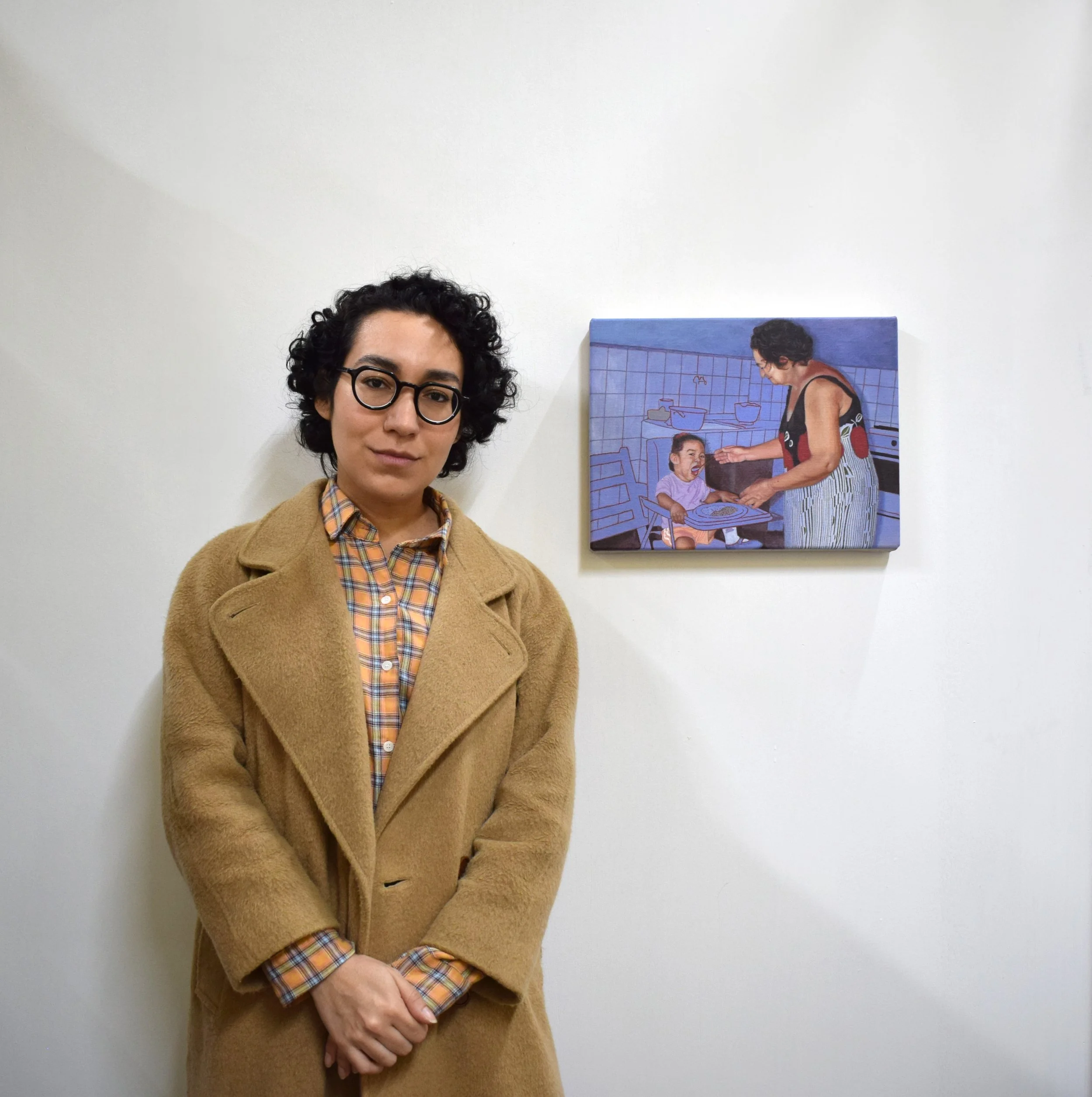
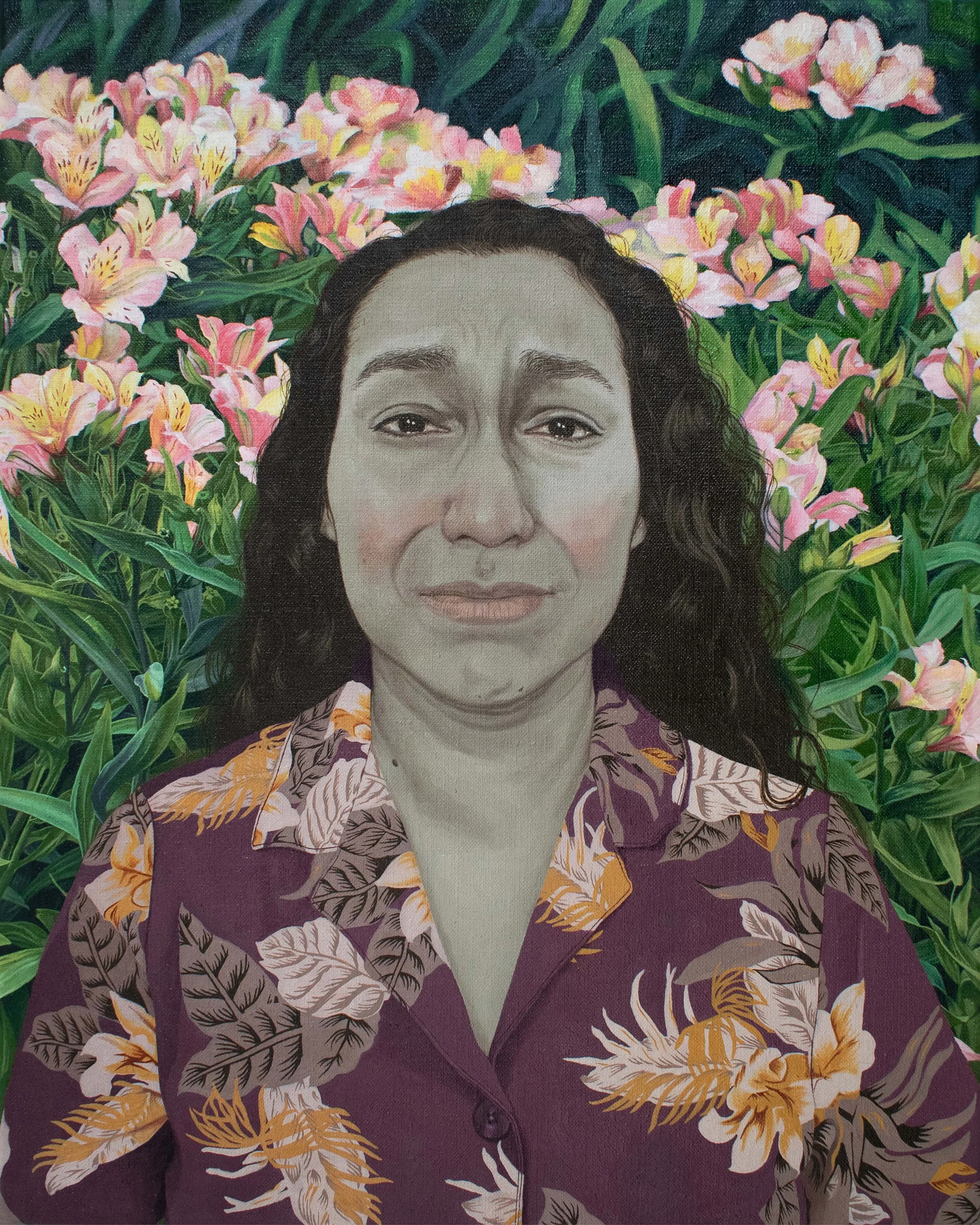
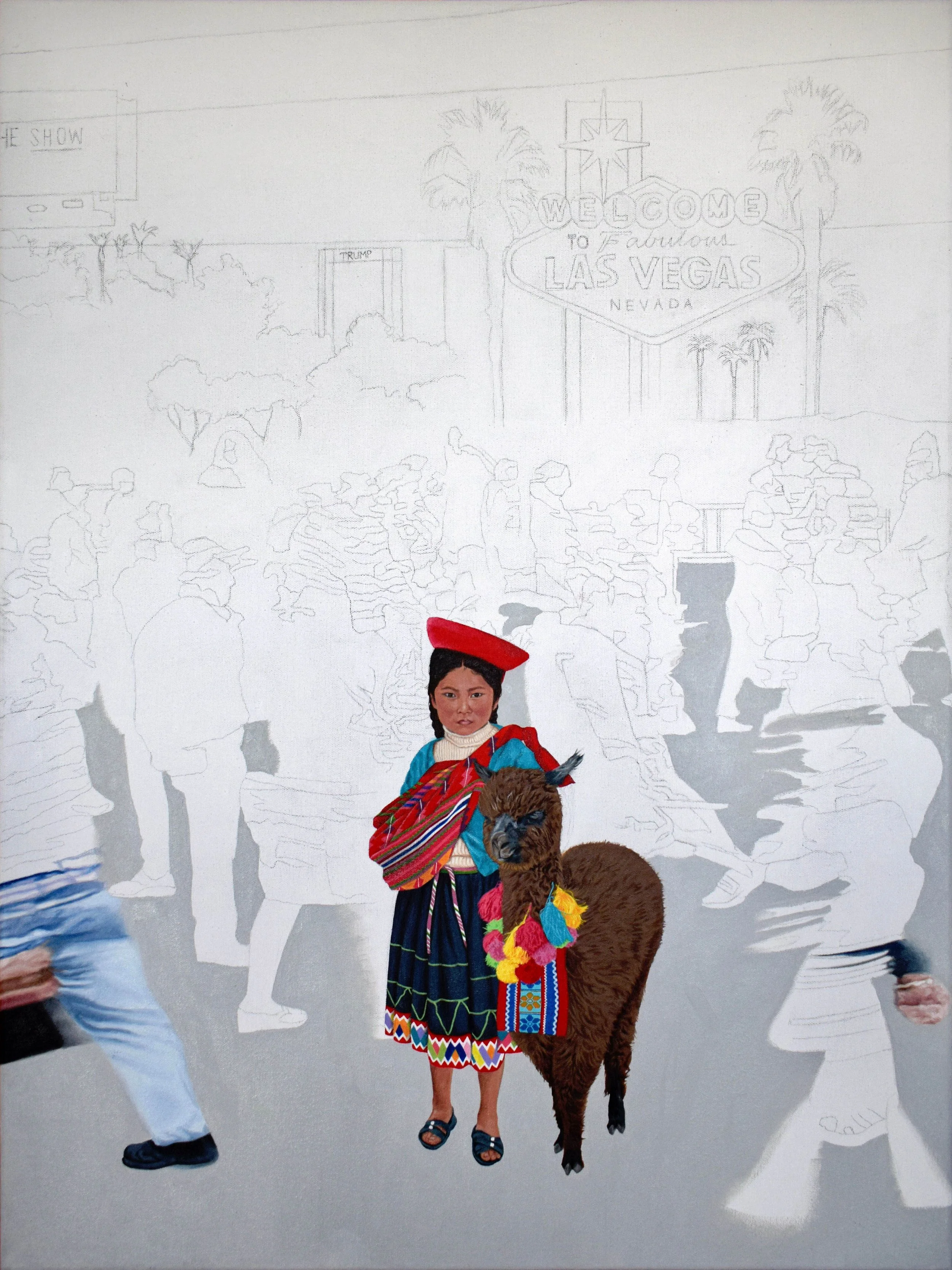
Artist Zully Mejía's practice exists at the intersection of memory, migration, and material intimacy. Born in Piura, Peru, and now based in London, the artist creates work that refuses the boundaries between personal history and collective experience, between painting and object, between what we carry with us and what carries us.
Mejía's approach to making is guided by necessity rather than medium. While painting remains her primary language, she moves fluidly into sculpture, embroidery, and installation when a work demands it, when the concept requires a specific material's weight of association, its embedded history. This responsiveness to what each piece needs has produced some of her most affecting work, including a jacket embroidered with her mother's portrait, transforming a garment into a meditation on distance, labor, and love across borders.
Her creative process is equally unbound. Some works begin with the need to metabolize an emotion or experience. Others emerge from a song, an exhibition, an image that won't leave her mind. In her collaborative pieces, she starts from photographs shared by others, moments they want to honor, memories that hold power. What unites these varied entry points is Mejía's commitment to excavating what lies beneath the surface of an image or feeling, to finding the forms that can hold complicated truths about family, identity, and belonging.
You draw heavily on themes of identity and memory. Which memories or formative experiences do you find yourself returning to the most in your work?
I keep coming back to relationships, in the most inclusive sense of that word. Relationships to people who are or have been part of my life. Relationships to places, experiences, and objects. My relationship with myself. I like to think of everything I experience in terms of relationships, and it allows me endless possibilities for reflection through my practice. When I look at my portfolio, my relationship with my mother seems to be the one I reflect on the most, especially the ways it has changed throughout different stages of our lives.
How has your experience of immigration shaped the way you see yourself, and ultimately, the stories you choose to tell through art?
It’s interesting because I’m a very self-aware person, and I would say that I understand myself very well, but being an immigrant often means I don’t fit neatly or fully into labels that help other people understand me. However, I find those differences can open the door for communication and connection. It requires effort, but there’s something really beautiful about feeling understood and accepted, and knowing that the people in my life care about seeing me. My practice is affected by this because I’m deeply interested in narratives of who people are and their unique compositions.
Who or what are your biggest influences, artistically, culturally, or personally?
Artistically, my work often draws from my own life and reflects on relationships and experiences. It frequently features friends, family, and people from my community. In terms of visual artists whose work I’m moved by, I would say Shyama Golden, Paolo Salvador, Trevor Shimizu, and Barkley Hendricks. Some of my favorite books and publications include Educated by Tara Westover, Profiles Journal, and Art as Therapy by Alain de Botton and John Armstrong.
I love music, and I listen to it a lot while I work. Some of my favorite artists are Natalia Lafourcade, Imperio Bamba, Hermanos Gutiérrez, and SZA.
What has been the most challenging part of developing your artistic voice?
The hardest part is finding the time to actually make art. I’m based in London, which I love, but it is an expensive place to live. I work full-time to support myself and typically make it to the studio two or three days a week, but a large portion of that time is spent on admin: email correspondence, open call applications, outreach, networking and events, invoicing, photographing artwork, packaging artwork, posting artwork, updating my website and newsletter, etc. Time management is incredibly important, as well as being very intentional about maintaining my practice.
What themes or ideas are you excited to explore next?
So many! I’m working on two paintings at the moment, and I’ve got so many reference photos to work with for the coming year. I’m excited to continue introducing nature into my work in ways that feel new for my practice. For example, I’m in the process of painting a rooster and flames (in different paintings) for the first time. I’ve also started playing around with oil sticks, which is bringing some interesting textures into my work. I’m experimenting, taking risks, and having fun.
Interview by Leila Antakly