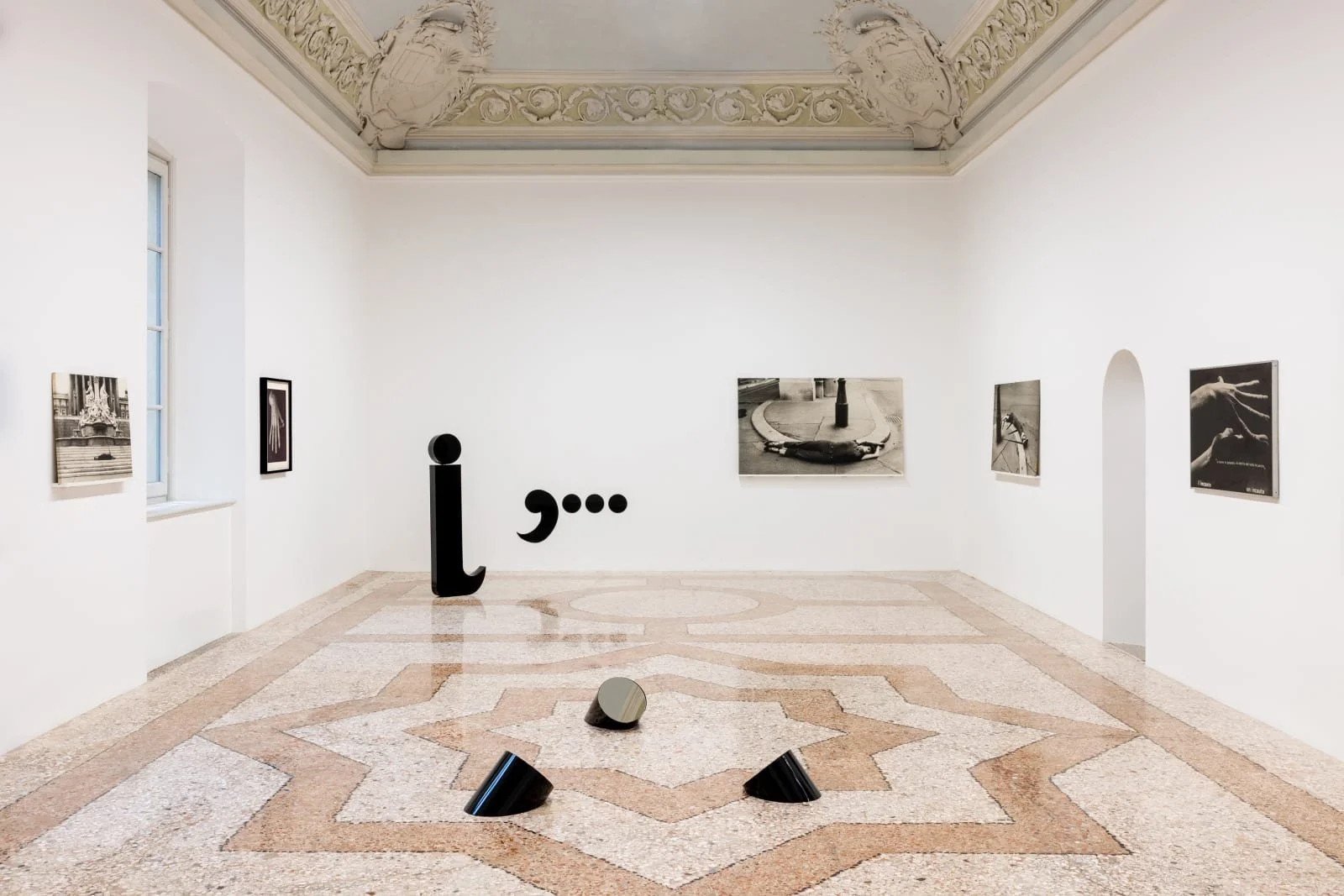
Body as Language: VALIE EXPORT and KETTY LA ROCCA Challenge Patriarchal Power at Thaddaeus Ropac Milan
When VALIE EXPORT invited strangers to reach through a curtained box and touch her breasts in 1968, she wasn't simply courting controversy, she was dismantling cinema itself. Her iconic performance TAPP und TASTKINO (TOUCHCINEMA) replaced the screen with skin, transforming passive viewers into active participants and exposing how deeply patriarchal structures had penetrated even our modes of perception. Nearly sixty years later, this radical gesture resonates with renewed urgency in Thaddaeus Ropac Milan's exhibition, which positions EXPORT's work in unprecedented dialogue with Italian artist KETTY LA ROCCA, revealing two parallel revolutions in feminist conceptual art that have long deserved joint recognition.
Both EXPORT, working in Vienna, and LA ROCCA (1938-1976), based in Florence, recognized a fundamental problem in the 60s: the language available to describe female experience had been constructed by and for men. Their solution wasn't to argue within this framework but to create an entirely new visual vocabulary, one that privileged the body, the gesture, and the haptic over the word. As LA ROCCA articulated it, she sought "the gesture as opposed to the word, the gesture as a universal language."
This shared philosophy manifests strikingly in their treatment of hands, not merely as symbols but as primary perceptual organs through which we comprehend and reshape reality. In LA ROCCA's video Appendice per una supplica (1972), female and male hands perform choreographed sequences that communicate beyond verbal language's limitations. Meanwhile, EXPORT's hands appear throughout her work as instruments of defiance and transformation, whether in performance or in the photographic series that titles this exhibition.
BODY SIGN B (1970) captures EXPORT hoisting her dress to reveal a garter tattoo on her thigh, her gaze directly confronting the viewer with unflinching confidence. This seemingly simple gesture accomplishes something profound: it exposes how the female body functions as a text that culture constantly writes upon, while simultaneously reclaiming authorship of that inscription. LA ROCCA's Craniologie series (1973) superimposes X-ray images of a skull with photographs of her hands, one finger extended, the other clenched, overlaid with the handwritten words "you, you, you." These double-exposures literally merge internal and external, thought and gesture, revealing language's inadequacy while cultivating what she called a "proto-feminist visual language." She described this work as exposing "the mystifying dimension of language" by placing "the gesture of the hand in all its expressiveness and communicative simplicity inside the skull, where the brain has given birth to the entirety of human thought and human language."
Both artists understood that their revolutionary ideas required an expanded field of action. Neither confined themselves to a single medium; instead, they treated photography, video, sculpture, and performance as "fluid and permeable", tools to be deployed strategically rather than traditional disciplines to master. This fluidity itself challenged the hierarchies embedded in art-historical categorization.
EXPORT's TOUCHCINEMA exemplifies this boundary-crossing approach. By transforming her body into a cinema screen, she collapsed the distance between artwork and audience, challenging not only gender dynamics but the entire passive structure of spectatorship. As EXPORT notes, while she declared herself explicitly as a feminist, LA ROCCA didn't align herself with the feminist groups active in Italy at the time. Yet LA ROCCA's contribution to feminist thought remains undeniable: "Bringing the body into conceptual art as a subjective perspective is a feminist achievement."
EXPORT's ongoing mission extends beyond challenging power structures to reimagining power itself. "I have nothing against power," she insists. "We need power. If we want to get things done, we need power." The critical question becomes how to define power in ways that analyze and liberate rather than oppress.
This exhibition arrives at a moment when questions about embodiment, language, and power have taken on new dimensions through digital culture and ongoing debates about gender and representation. EXPORT and LA ROCCA's strategies, using the body as material, privileging gesture over language, collapsing boundaries between media, speak directly to contemporary artists grappling with how to create outside or against dominant paradigms.
Their work reminds us that transformation requires more than critique; it demands the construction of new languages, new ways of seeing and being seen. By replacing the cinema screen with skin, by superimposing hands over skulls, by meeting the viewer's gaze while revealing a self-authored marking, these artists didn't just comment on existing structures, they built alternatives.
The dialogue between EXPORT and LA ROCCA at Thaddaeus Ropac Milan reveals not just two extraordinary individual practices but a shared feminist conceptual project whose full implications we're still discovering. In their living mirror screens, constantly changing, we see reflected not only their revolutionary moment but our own ongoing struggles to speak, to see, and to touch in ways that honor the full complexity of embodied experience.
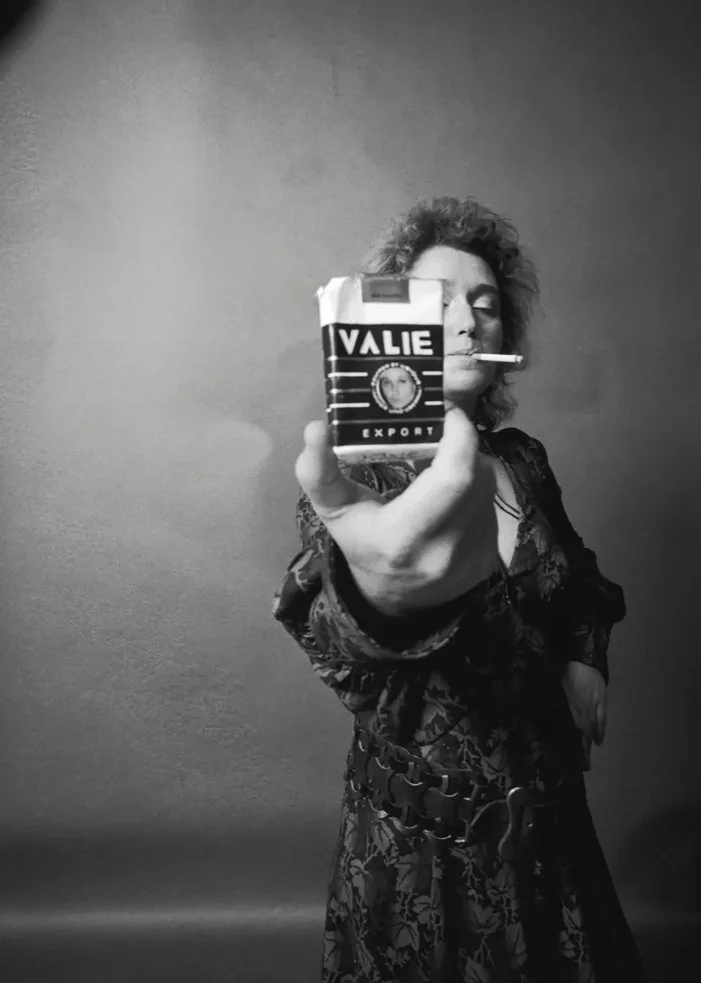
Cover photo: VALIE EXPORT–SMART EXPORT, 1967/70
(Image credit: © VALIE EXPORT / SIAE 2025. Courtesy Thaddaeus Ropac gallery London · Paris · Salzburg · Milan · Seoul)
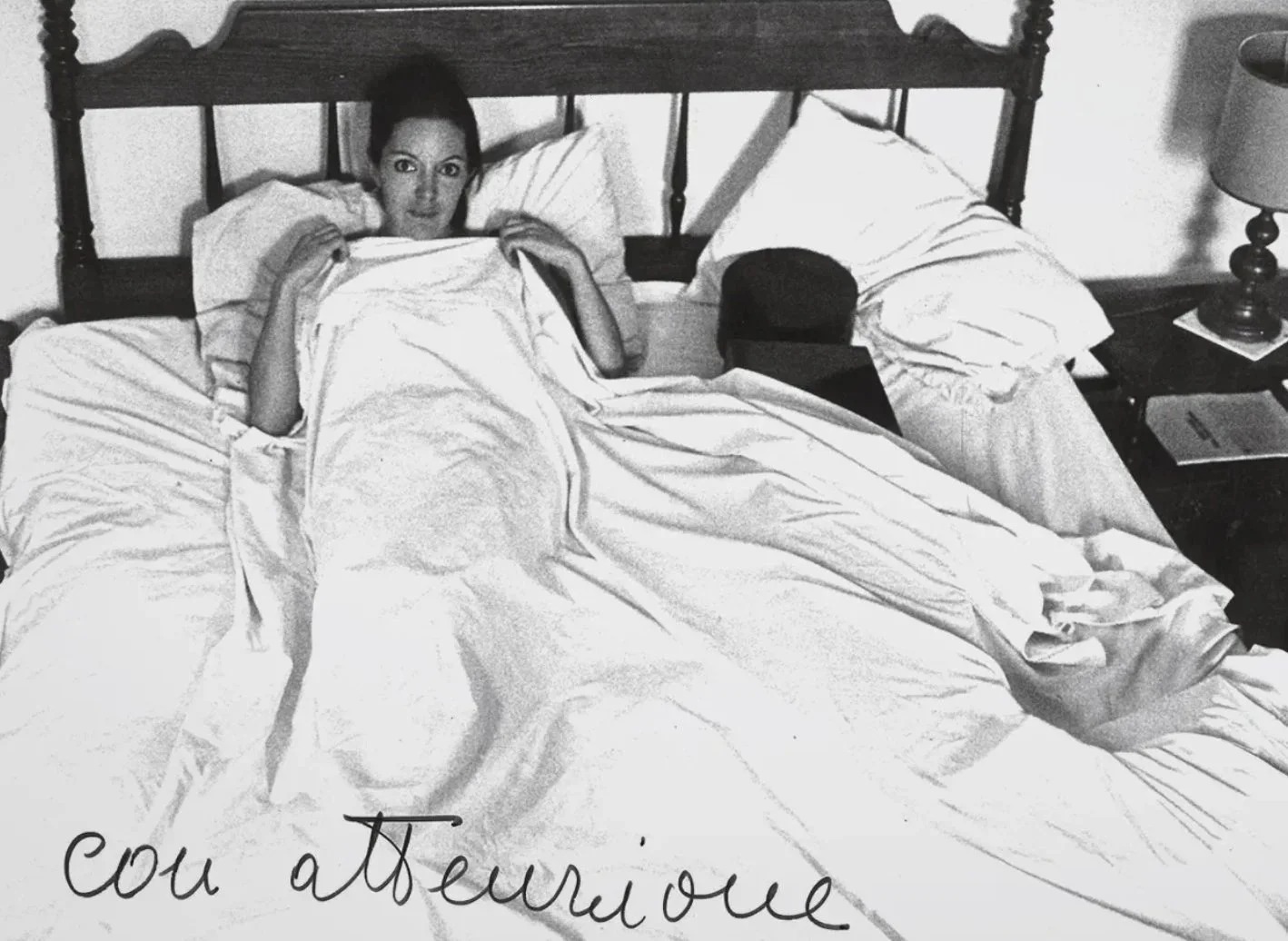
Ketty La Rocca, Con attenzione, 1971
(Image credit: © Archivio Ketty La Rocca | Michelangelo Vasta. Courtesy Thaddaeus Ropac gallery London · Paris · Salzburg · Milan · Seoul)