JESSICA LICHTENSTEIN'S PERFECT STORM

STORM Digital Wonderlands & Tree Nymphs Exhibition · 2021 · NYC & Jackson Hole
A 3-wall installation of tree nymph girls blown sideways by hurricane winds. Bernini-esque light on the path below. Girls cut from mulberry paper scattered like leaves. Hearts that hold every honest word. This is the show born from 2020.
"A reminder that this too shall pass. But also a reminder that like in nature, more storms will come — always come. We live in cycles. Winter, spring, summer, fall."
We've been featuring Jessica Lichtenstein's work over the years — and she keeps evolving. Perfect Storm is a show born from the year 2020: all the storms that coalesced into a mega-storm. She's back, and the work is more vulnerable than ever.
When Lichtenstein first started out, she was super into shock value and controversy — buying half-naked mass-marketed dolls and putting them on toilets. The work asked questions about artistry, authenticity, originality, appropriation, sexuality, authorship, and consumerism. Big questions, delivered with provocation.
Perfect Storm is different. This show has less to do with figurative bodies and sexuality and everything to do with the thoughts that underlie that superficiality. There's more sentimentality, more fragility. She's allowed herself to be more vulnerable, and for her art to read as a diary.
The show is also a response to the eclipse of 2017 — which eerily mirrored what was going on on Earth. The moon, traditionally feminine in folklore, obstructing the masculine sun, simulating the women's movements that burgeoned after the 2016 election. "It seemed like a changing tide, a rebirth of some kind."
From a distance, Lichtenstein's black, gold and pearl silhouettes resemble woodblock prints of blossoming trees. Look closer and each flower is a female body contorted into a unique position. The faceless physiques allude to the male gaze's tendency to reduce women to their bodily parts — but for Lichtenstein, these women are in the midst of a revolution.
The centrepiece of Perfect Storm is a three-wall installation. Tree nymph girls blown in every direction by hurricane winds. A sheath of Bernini-esque sunlight poking out below on a path. Scattered on the floor beneath: leaves in the shape of girls, cut from mulberry paper.
The piece is called "After the Storm." A reminder that this too shall pass. But also a reminder that like in nature, more storms will always come. We live in cycles — winter, spring, summer, fall. The rest of the show works through the mental capacity to deal with that knowledge and either celebrate or despair over it.
The show was born out of the year 2020: covid, racial reckonings, socioeconomic upheaval, political chaos — all the storms that coalesced into a mega-storm. And alongside the catastrophic, the everyday beautiful thoughts and anxieties we are all dealing with.
"Spending time in quarantine collecting quotes from romantic poetry, literature, newspapers, blogs, social media, philosophy... compiling them into hearts — at a time of political discord and racial reckonings and a health crisis. I'm so lucky to do what I love."
Since we last chatted, what has changed the most about your approach to your art?
When I first started out I was super into shock value and controversy. Buying half naked mass-marketed dolls and putting them on toilets. My art contained questions about artistry, authenticity, originality, appropriation, sexuality, authorship, consumerism.
How do you see the art world in general evolving?
Things are already changing. And honestly they are changing at a warp speed that is so crazy, it's hard to keep up. When I started over 10 years ago, you couldn't get anywhere without a gallery. Now with social media, you can control your content and collectors can follow you directly.
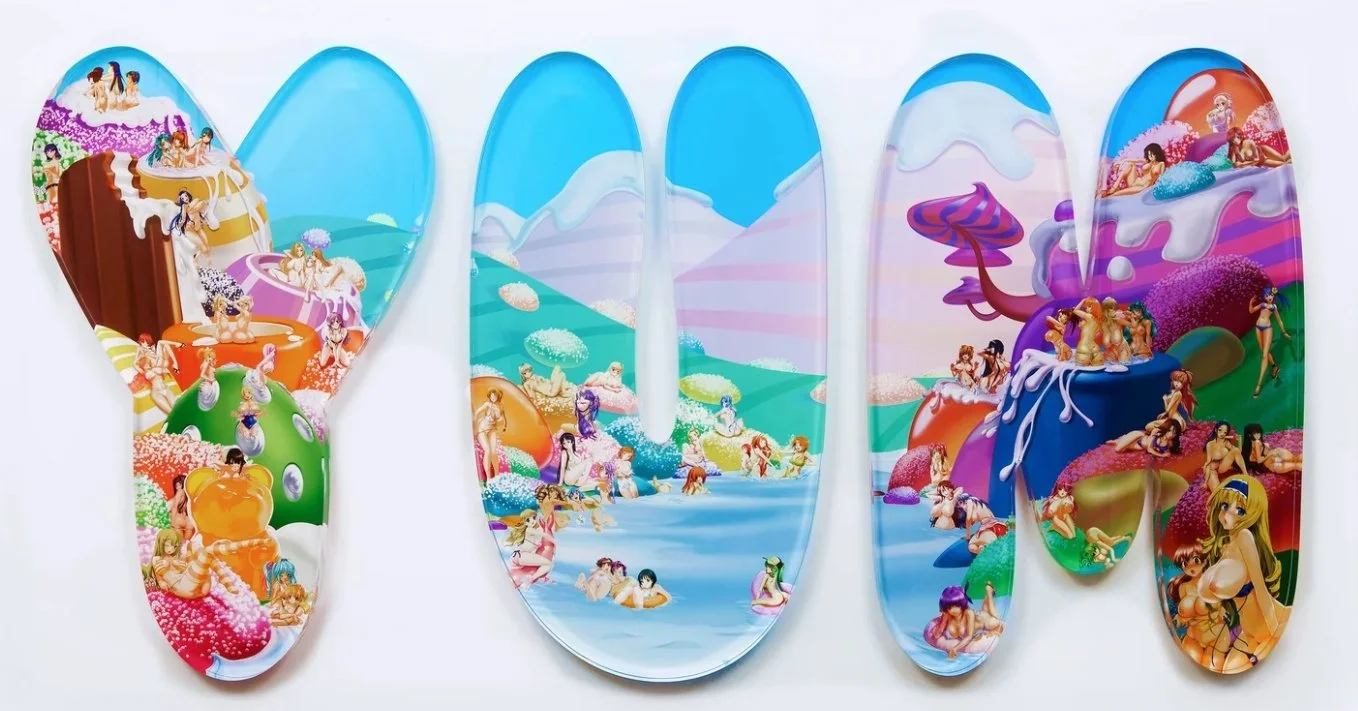
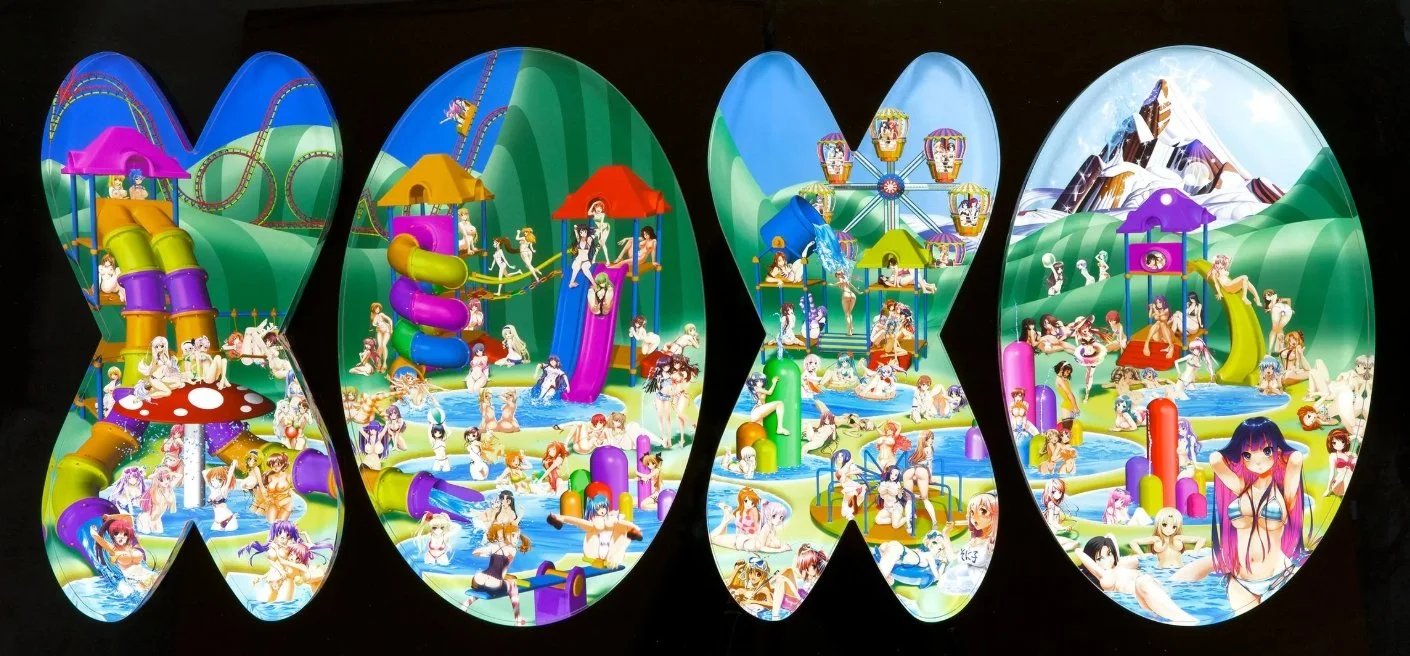
So I had to come up with ways to produce my digital art — hence the thick acrylic pieces laser cut to look more sculptural on the wall. But that solution came out of a main problem: people don't collect digital art. Now with the NFT boom, things will change. It shall be interesting.
Have your greatest inspirations or influences changed?
My greatest inspiration still comes from nature and the world around us. This whole show was born out of the year 2020 and the highs and lows of this unprecedented year — covid, racial, socioeconomic, political, sexual — all the storms that coalesced into a mega-storm.
There's a piece in the show that is a 3-wall installation of my tree nymph girls being blown in every direction by hurricane winds, and a sheath of Bernini-esque sunlight poking out below on a path. Below are scattered leaves in the shape of girls, cut from mulberry paper. The piece is called "After the Storm."
Favorite place in the world?
I live between Jackson Hole, Wyoming and NYC. NYC gives me the crazy, frenetic energy that I need to be creative. Jackson gives me the peaceful moments in between. Yin and yang.
Tell us something you won't share with anyone else.
OF HOPE.
LOCKETS OF
TRUTH.
Lichtenstein uses the form of the heart not only as a symbol of love but as the talisman of a clichéd heart-shaped locket. She wanted to challenge the viewer to look at this iconic cliché with different eyes.
Instead of lockets that are positive reminders of "love," "hope," "breathe," or "joy" — things that are aspirational by nature — she wanted her lockets to hold words that would lay bare everything you were thinking, with complete honesty.
Love is just one emotion she plays with.
Black, gold and pearl silhouettes that resemble woodblock prints of blossoming trees — until you look closer and each flower is a female body contorted into a unique position. Faceless, hyper-sexualized. But emerging. "These women are revealing themselves, revealing their stories."
Discover more artists chosen for their ideas,
not their visibility.
Antakly Projects is an independent platform dedicated to artists, musicians, photographers, designers, and thinkers at every stage — from emerging voices to established masters. Every interview is selected for depth, not reach.
"I'm so lucky to do what I love, and to love what I do. And so lucky that in helping myself, I can impact people to ask those same questions."
More cultural commentary from Leila Antakly — on art, women, and the world we're paying attention to.
Read on Substack ↗