The Abundance Trap: What We Lose When Everything Competes for Our Attention
You open Spotify on a Tuesday morning, searching for something new. The algorithm offers you a personalized playlist. You scroll. And scroll. Thirty seconds into one song, you skip to the next. Nothing quite lands. You close the app, somehow more tired than when you started. You have access to practically everything humanity has ever created, yet you can't find anything worth your time.
This isn't a personal failing. It's the defining paradox of our era.
Every day, over 100,000 tracks are uploaded to Spotify. The average person might listen to 50-100 songs in that same period. The math is brutal: even if you listened to new music every waking hour, you couldn't keep pace with a single day's uploads, let alone the decades of catalog already waiting. And Spotify is just one platform. Add in the thousands of hours of video content released weekly, the over four million books published annually worldwide, the five million active artists competing for gallery walls and collector attention, and the endless stream of influencers telling you where to shop, eat, sleep, and what to think about it all.
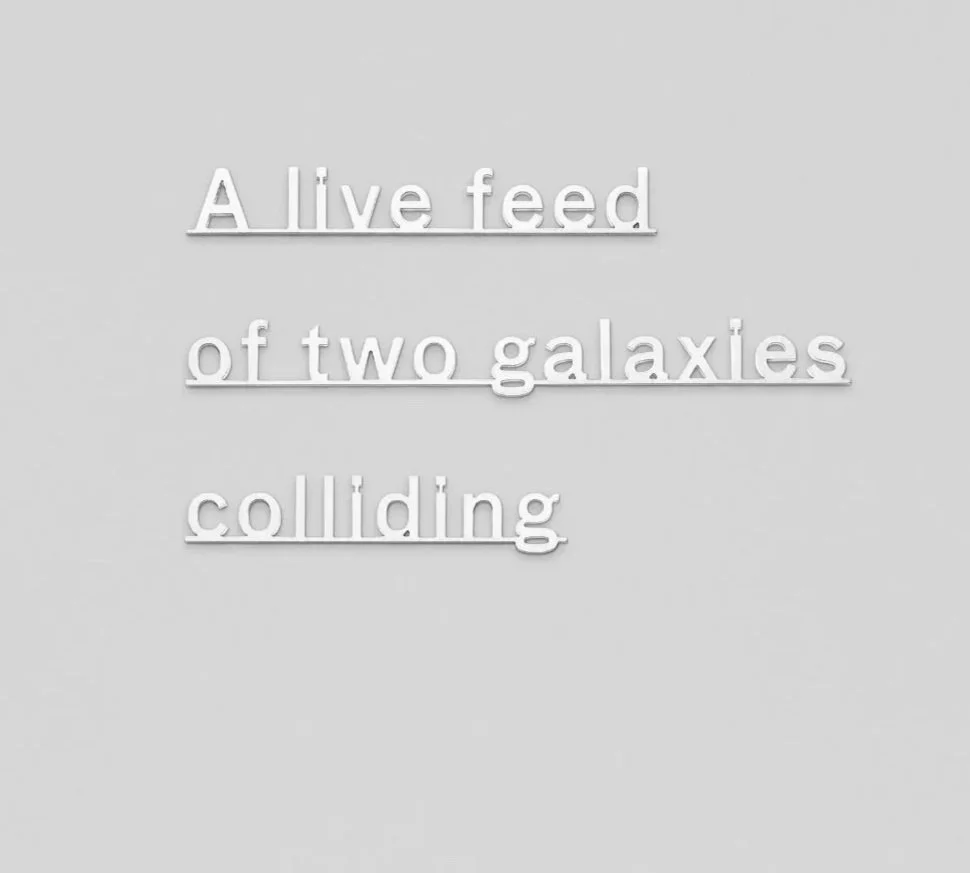
We're not living in an era of abundance. We're drowning in noise.
When Everyone Can Be an Artist, What Does "Good" Even Mean?
Before social media fundamentally restructured how culture moves, gatekeepers decided what reached mass circulation. Book publishers determined which manuscripts became novels. Record labels chose which artists got studio time and distribution. Film distributors decided which movies deserved marketing budgets. Gallery curators selected which paintings hung on walls. These gatekeepers were flawed, often elitist, frequently exclusionary, but their filtering created something we've lost: a shared understanding of what "good" meant.
The internet promised to democratize art by dismantling these gates. And it delivered. A brilliant filmmaker in Lagos can now share work with millions without needing a Hollywood deal. A bedroom producer in Seoul can build a global fanbase without a record contract. The gates fell, and creativity flooded through.
But something unexpected happened in the flood.
When the gatekeepers stepped aside, they weren't replaced by freedom, they were replaced by algorithms. And algorithms don't care about good. They care about engagement. They prioritize what gets clicked, shared, and watched, which often means the emotionally charged, the sensational, the optimized-for-virality. Quality became conflated with popularity. "Good" became whatever the algorithm decided to amplify.
The statistics tell a devastating story. On Spotify, 99.5% of all streams go to tracks that exceed 1,000 plays per year. The remaining fraction, representing millions of songs, gets virtually nothing. Most music uploaded today will never be heard by anyone. In the art world, five million active artists compete for a collector base that hasn't grown when adjusted for inflation over the past two decades. The supply has exploded. The demand has not.
For aspiring artists, this presents an impossible dilemma. There are now two distinct paths: popular or good, in the traditional sense. To be "good" in the way we once understood it might require years of study, apprenticeship, the slow development of craft. That path offers no guarantee of visibility, let alone survival.
The question becomes existential: If a song plays in the forest of Spotify and no one streams it, does it exist? If a painting hangs in an artist's studio but never appears in a gallery or feed, was it made? We've achieved the democratization of creation, but we're learning that creation without discovery is a tree falling in an empty forest.
How Oversaturation Changes Us
The crisis of oversaturation isn't just about artists struggling to break through the noise. The deeper cost is what this deluge does to the rest of us, to our capacity for depth, our ability to connect with ideas and each other.
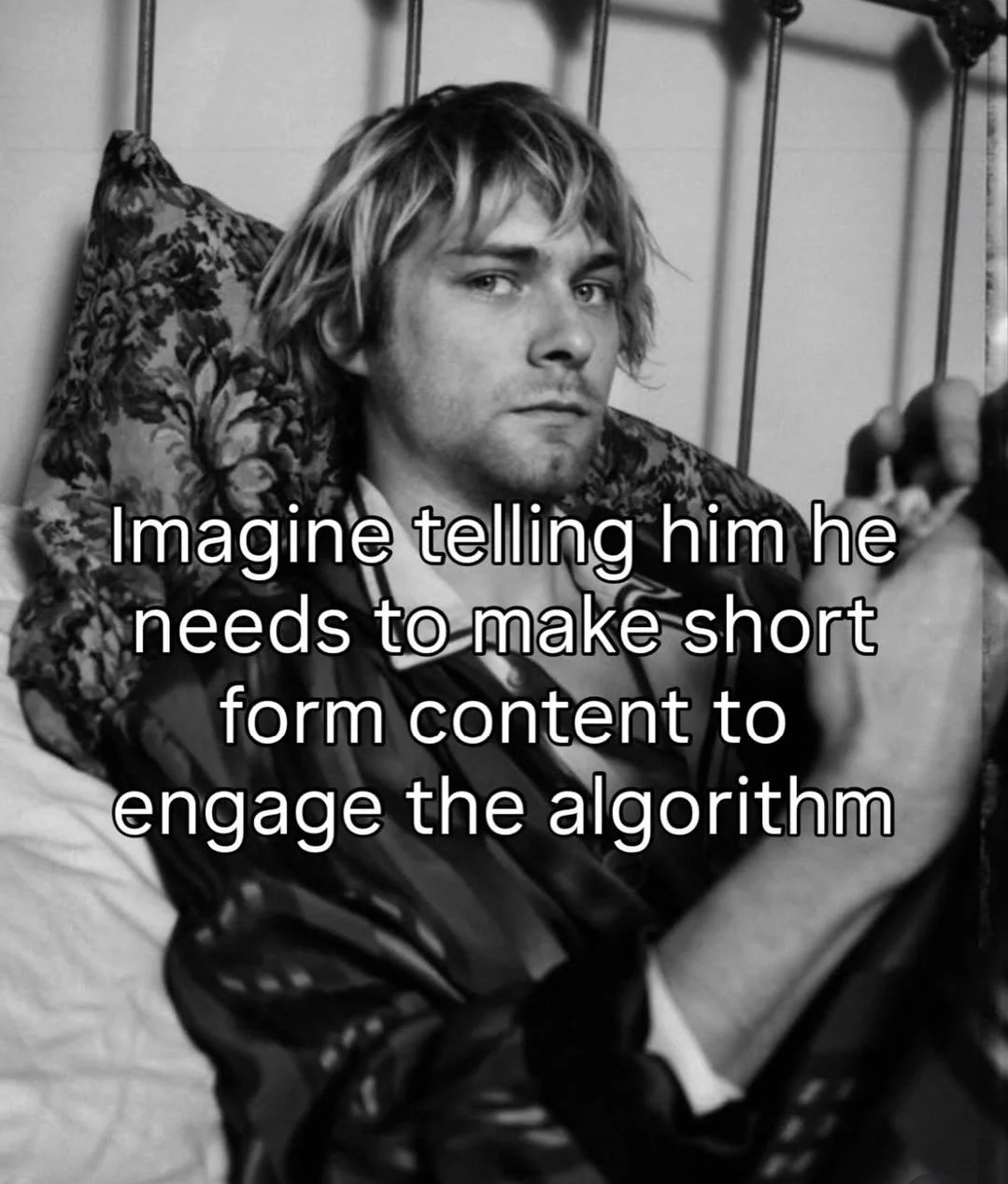
In a digital environment designed for conversion and clicks, the pace is lightning-fast. Algorithmic feeds reward immediate engagement, not sustained reflection. Scroll culture doesn't just change what we consume, it changes how we think. Many people now find themselves so conditioned by scrolling that they report an inability to slow down in the way immersive reading requires. Yup, that’s me and I’ll admit it. The reading brain that once sat with a book, followed a thread of thought, held ambiguity, and arrived at insight, I believe that cognitive capacity is under threat.
This shift from deep to shallow thinking carries consequences beyond personal inconvenience. Our collective ability to engage with difficult questions weakens. When attention fragments, the capacity for empathy, analysis, and long-term insight becomes compromised. Critical thinking, which once accompanied immersive engagement with culture, is quietly fading.
We're experiencing another loss too: the death of shared culture. The monoculture, when everyone watched the same TV shows, listened to the same radio stations, read the same books had its problems, sure. It reflected narrow perspectives and excluded diverse voices. But it gave us common cultural touchstones, a foundation for conversation with strangers, a sense that we were participating in something together.
Now culture has fragmented into infinite niches. We're algorithmically sorted into interest clusters, each fed content that reinforces existing preferences. We're digitally hyperconnected. Constantly online, constantly accessible and yet humanly so disconnected. Political division deepens. Finding common ground becomes harder. Someone recently asked, echoing Rodney King: "Can't we all just get along?" But perhaps the more urgent question is: Can we even find each other in the noise?
The irony cuts deep. We have infinite options but struggle to find meaning. We're surrounded by more art, music, film, and literature than any generation in human history, yet we're starved for depth. The abundance doesn't nourish it overwhelms. We're not experiencing cultural richness; we're experiencing cognitive exhaustion.
Reclaiming Depth in the Age of Infinite Scroll
But something interesting is happening in response to the overwhelm. Human curation declared dead in the early internet era is, (I hope), experiencing a resurrection. And it's evolving into forms the old gatekeepers would barely recognize.
While traditional gatekeepers were disrupted, their function wasn't eliminated. Now, exhausted by algorithmic sameness and AI-generated content that feels increasingly generic, people are actively seeking the human touch again. Curation is becoming a premium service. Personal taste, the ability to effectively filter and discern quality has become a valuable skill in a world drowning in data.
Niche newsletters have exploded, offering specialized, high-quality filtering to dedicated audiences. Private communities provide curated discussions away from the algorithmic feed's chaos. Physical gatherings such as book clubs, listening parties, etc. have emerged as antidotes to digital saturation, spaces where depth becomes possible again.
Some artists are inverting the traditional playbook entirely. Fred Again, the British producer, built his following not by chasing viral moments but by creating exclusive London parties that drove social presence through FOMO and genuine experience. His fans want a piece of the vibe of his events, not just his music. The experience creates the community; the community amplifies the art.
Kneecap offers another model. They released a film that added critical context and narrative depth to their music. They run an exclusive WhatsApp group for superfans, often referencing the group chat during live shows, bridging the gap between online and physical reality. The lesson from both acts: success isn't about reaching everyone; it's about connecting deeply with the people who care most.
These approaches point to something crucial: the semantic gap between algorithmic and human curation. As Stocksy's Culture Report on "The Curation Paradox" notes, "AI struggles with subjectivity. Algorithms operate on quantifiable signals while human aesthetic appreciation is deeply contextual, emotional, and irrational." Despite unprecedented access to inspiration, we're witnessing a collapse into visual uniformity across global aesthetic systems. Everything is starting to look samey because algorithms optimize toward convergence.
Human curators can provide what algorithms cannot: context, emotional resonance, cultural navigation, the ability to recognize quality that hasn't yet proven itself through metrics. This isn't nostalgia for the old gatekeepers with all their biases and exclusions. This is something new, a distributed network of taste-makers, community curators, and gatekeepers who filter not from positions of institutional power but from genuine expertise, passion, and connection to specific communities. Intentional design choices are emerging too. Some platforms are experimenting with features that encourage focus over endless scroll, completion over constant novelty. The act of finishing something such as a book, an album, a film from beginning to end without checking your phone has become a form of resistance. Would you agree?
We're also hitting saturation points in unexpected places. How many more influencers can tell us where to eat, shop, or stay before we tune out entirely? How much longer can everyone online try to convince us of something before we close the apps?
Living in the Tension
We can't go back to the old gatekeepers, nor should we. The democratization of creative tools and distribution represents genuine progress since more voices can be heard, more perspectives can be shared, more communities can find and support their artists. But we can't function in infinite noise either. We're learning, slowly and painfully, that access to everything can function as access to nothing. That connection without depth is loneliness with company.
Perhaps the path forward involves what we might call conscious friction. Choosing depth over breadth, completion over consumption, human curation over algorithmic optimization. It means recognizing that the algorithm's goal (keep you scrolling) and your goal (find something meaningful) are not aligned. It means seeking out trusted filters, building and participating in communities of taste, supporting artists and curators who do the work of making sense of the noise.
It means understanding that in a world of infinite content, attention is not just scarce, it's sacred. Where we direct it, what we choose to engage with deeply rather than skim, whom we trust to help us navigate the deluge, these become among the most important decisions we make. We're participants in a massive cultural transformation, and we're making it up as we go. The abundance trap is real. But so is our hunger for meaning and human connection. And that hunger, at least, might be the signal that guides us through.
Thanks for reading and Happy New Year.
Written by Leila Antakly
Photo of Kurt Cobain Grunge Bible