Artist Angelo Kakavas: Intuition, Materials and the Inner Child
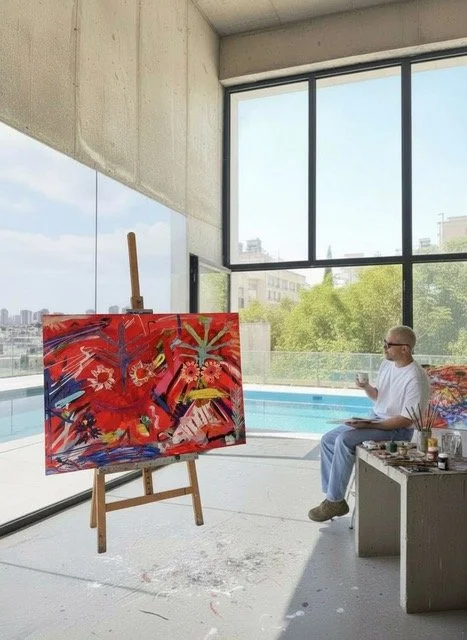
The landscape of abstract art in 2026 is characterized by a convergence of digital aesthetics with traditional mediums, an increased focus on sustainability, and a democratic approach to creation that transcends geographical boundaries. Among the emerging voices redefining the medium is Athens-based artist Angelo Kakavas who stands out for his deeply intuitive practice that bridges childhood spontaneity with adult introspection.
Today's most innovative artists are incorporating industrial materials, natural elements, and unconventional substrates to create works that speak to our complex relationship with both technology and nature. This material experimentation represents a fundamental shift in how abstract art engages with contemporary concerns about sustainability, authenticity, and place.
The Artist's Foundation
Born and raised in Athens as one of five children, Angelo discovered the power of creativity early through his mother, a painter, fashion designer, and hardworking woman who remains the most important artistic and moral influence in his life. From a young age, painting became his way of communication and reflection, drawn to the relationship between color, form, and texture as a process of introspection and liberation.
His father introduced him to football, an experience that taught discipline, perseverance, and teamwork—qualities that would later inform his artistic practice. Angelo studied Economics, motivated by a desire to understand the social and cultural structures shaping the world.
Our Interview
What sparks the beginning of a new work?
Usually, an image or an emotion that triggers me—or just a feeling I can't explain—is the spark to get started. From there, I let my intuition guide me. I don't start with a strict plan but a general idea of what I want to create. I let the work breathe and show me its way.
Intuition plays a big role as a helper: what color to choose, when to stop, when to break something to find it again. When I don't think too much, that's where the truest results come out. Intuition knows what to do.
How does your personal life find its way into your work?
Inevitably, my inner world and my experiences emerge in the works. Happy and ugly moments of my life, my roots, the landscapes I have loved and the people I have lost—they always find, without intention, a place in my work.
Was there a moment when you realized art was more than a hobby for you?
Yes. I remember looking at an almost completed work and realizing that what I was feeling was not simply the joy of creation, but a need for creation and communication that resulted in something others liked and wanted to have. That filled me with joy.
How has your artistic approach evolved over time?
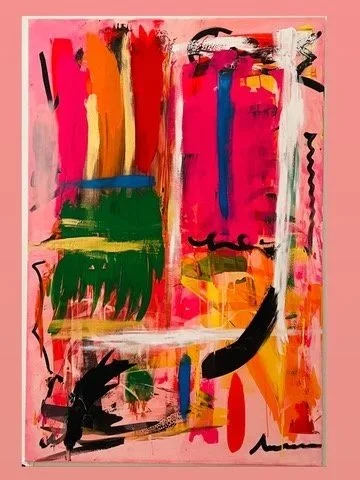
At first I wanted everything to be "right"—to not make mistakes, to follow the rules. But I never liked that, nor did I follow them. I learned to paint in my own way. Now, I trust more in awkwardness, randomness, mistakes, and spontaneity. I learned to leave room for the unexpected. Sometimes, a brushstroke I hadn't thought of can become the soul of the painting.
Where does your inspiration come from?
My inspiration comes deeply from the child we all carry within us—that spontaneous, curious part of ourselves that sees magic in everyday stimuli—and from our adult self with its concerns about life and the world around it.
Painting for me works like psychotherapy: a private dialogue with my inner world, where I let the colors unfold what is consciously or unconsciously repressed in my adult self. Through the canvas, the child in me plays freely, without criticism, and the adult expresses himself without fear and anxiety, transforming daily wear and tear into regeneration and wounds into beauty.
How do you handle creative blocks or self-doubt?
When I feel blocked or have doubts, I stop. I don't push myself. When you stop pushing and trying, it comes back on its own, usually clearer than before. I'm never in a hurry to finish a painting. I come back when my insides are ready.
What do you hope viewers experience when they encounter your work?
I hope they feel something personal. To stop for a moment. To travel. To feel something without having to explain it. Maybe peace, maybe an inner story, maybe something they can't explain in words. I don't want to give them answers, but to open a space of feeling and inner dialogue—to transform into a world of their own.
If someone stands a little longer in front of the work and asks themselves "what is it that touches me?" or smiles, then I feel that I have succeeded. I want my works to touch something inside you, even if for a second.
What does art mean to you?
Art for me is a way to communicate without words. Each painting is a bit like a conversation with myself, which I hope continues with those who see it.
Collector's Perspective
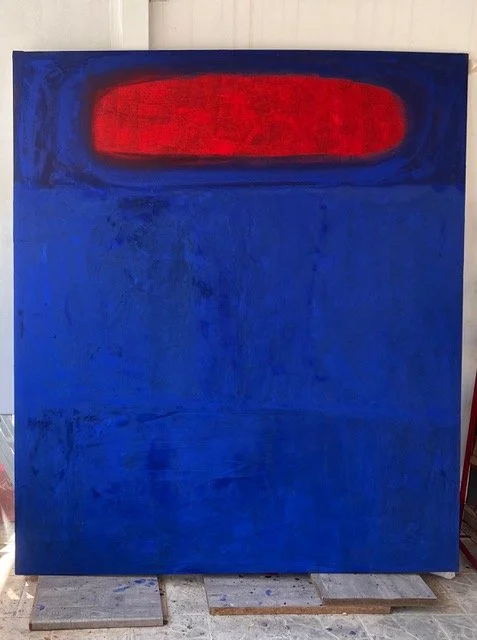
Understanding these developments is essential for collectors, interior designers, and art enthusiasts looking to stay ahead of the curve. What to consider: oversized abstract paintings with commanding color fields, sculptural works that interact with light and space, and installations that create environments rather than occupy them.
The world of abstract art continues to evolve in exciting and unexpected directions. The trends emerging this year showcase a dynamic blend of technological innovation, environmental consciousness, and a renewed appreciation for human expression. From bold geometric explorations to naturalistic interpretations, contemporary artists like Agelos are pushing boundaries and challenging conventional definitions of what abstract art can be.