Nika Neelova — Reverse Archaeology and the Memory of Matter
Nika
Neelova
She reassembles staircases so the absent body can still climb them. She carves roses from shark teeth that are millions of years old. She seals her own tears inside glass sculptures that will dissolve in air. What she calls reverse archaeology is something rarer: the practice of listening to what matter already knows.
Bypassing straightforward means of fabrication to find modes of retrieving and revealing information already within materials. Considering an alternative reading of human history by examining found objects and architectural debris. Transforming them beyond functionality. In these works the human body and touch remains as a vestigial memory.
"When you reassemble a staircase, you choreograph the absent body into space. In the absence of people, their ghosts remain as vestigial memory."
Nika Neelova does not make objects. She makes conditions under which objects reveal what they already know. Her material is always architectural — salvaged bannisters, reclaimed stone, water-soluble glass, fossilised bone — and her method is always the same: bypass the straightforward and go looking for what the material is concealing. The sculptures that emerge from this process are not representations of history. They are history, arrested in a new form.
She calls this reverse archaeology. Where conventional archaeology works forward from found things to construct a past, Neelova works backwards from present materials to excavate the futures embedded in them. The difference is not semantic. It changes everything about what the work does to the viewer who stands before it.
"I really believe in the consciousness of matter. Everything has its own rhythm, its own agency. Wood breathes, glass cracks, metal corrodes. Things move even when we can't see them."
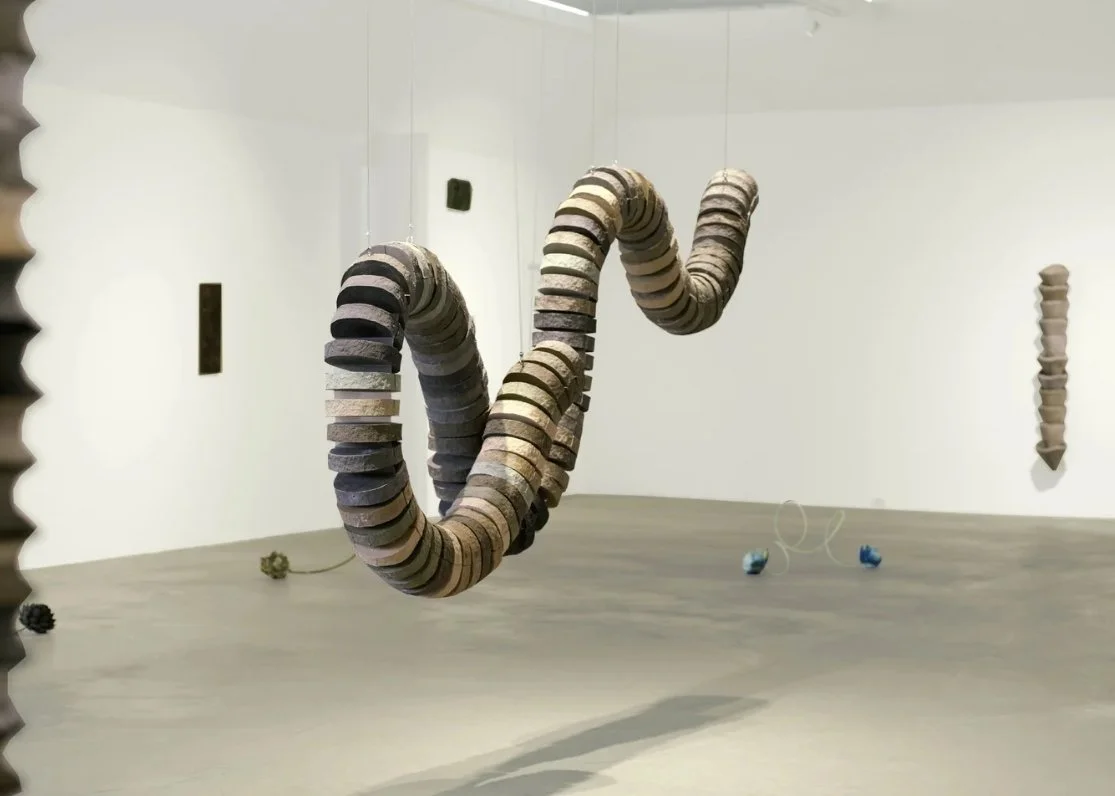
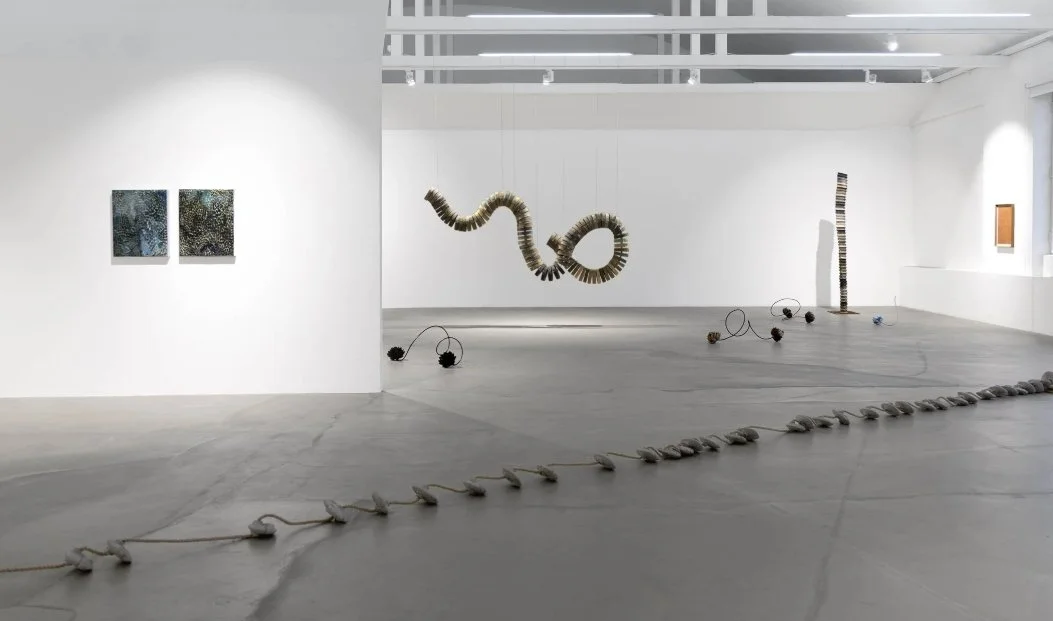
The exhibition UMBRA, which opened at NIKA Project Space in Paris in September 2024, was in many ways the fullest realisation of Neelova's method to date. The title — meaning shadow in Latin — set the terms immediately. This was not a show about light. It was a show about what light cannot reach, what persists after illumination, what clings to surfaces long after the source has moved on.
The works in UMBRA drew from a residency at Sir John Soane's Museum in London, one of the most labyrinthine and temporally compressed spaces in England — a building that collapses Egyptian antiquities and Victorian eccentricity and Regency architecture into a single impossible interior. Neelova is drawn to exactly these conditions: where time has been folded, not narrated.
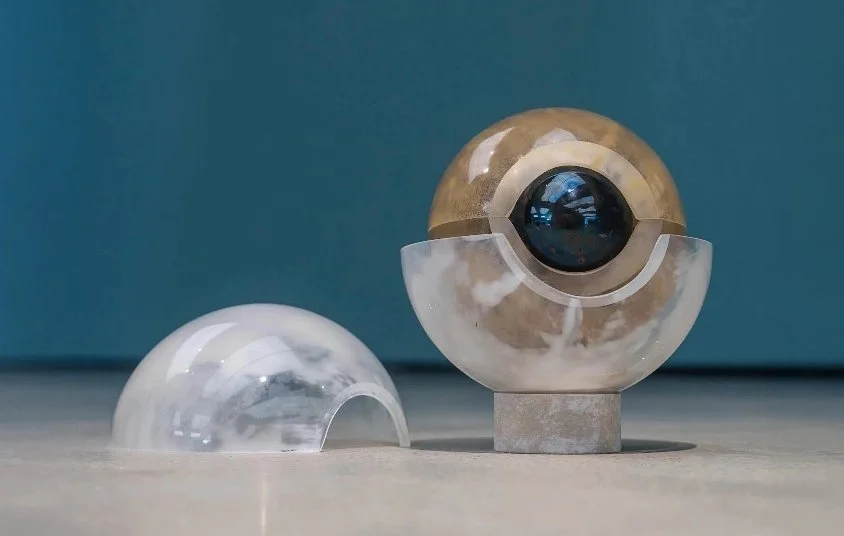
The Lacrymatories series is the work that stops you. Based on ancient Roman tear catchers — small vessels used to collect mourners' tears as part of burial ritual — Neelova constructed sculptures from water-soluble glass, then sealed her own tears inside them. They are, from the moment of their completion, dissolving. Interacting with the air, they slowly disappear. This is not a metaphor for impermanence. It is impermanence enacted in real time, a live performance of grief that never quite ends and never fully resolves.
"Once objects are liberated from function, they acquire new, abstract meanings. Absence and presence are infinitely tied together; it depends which side of the object you look at."
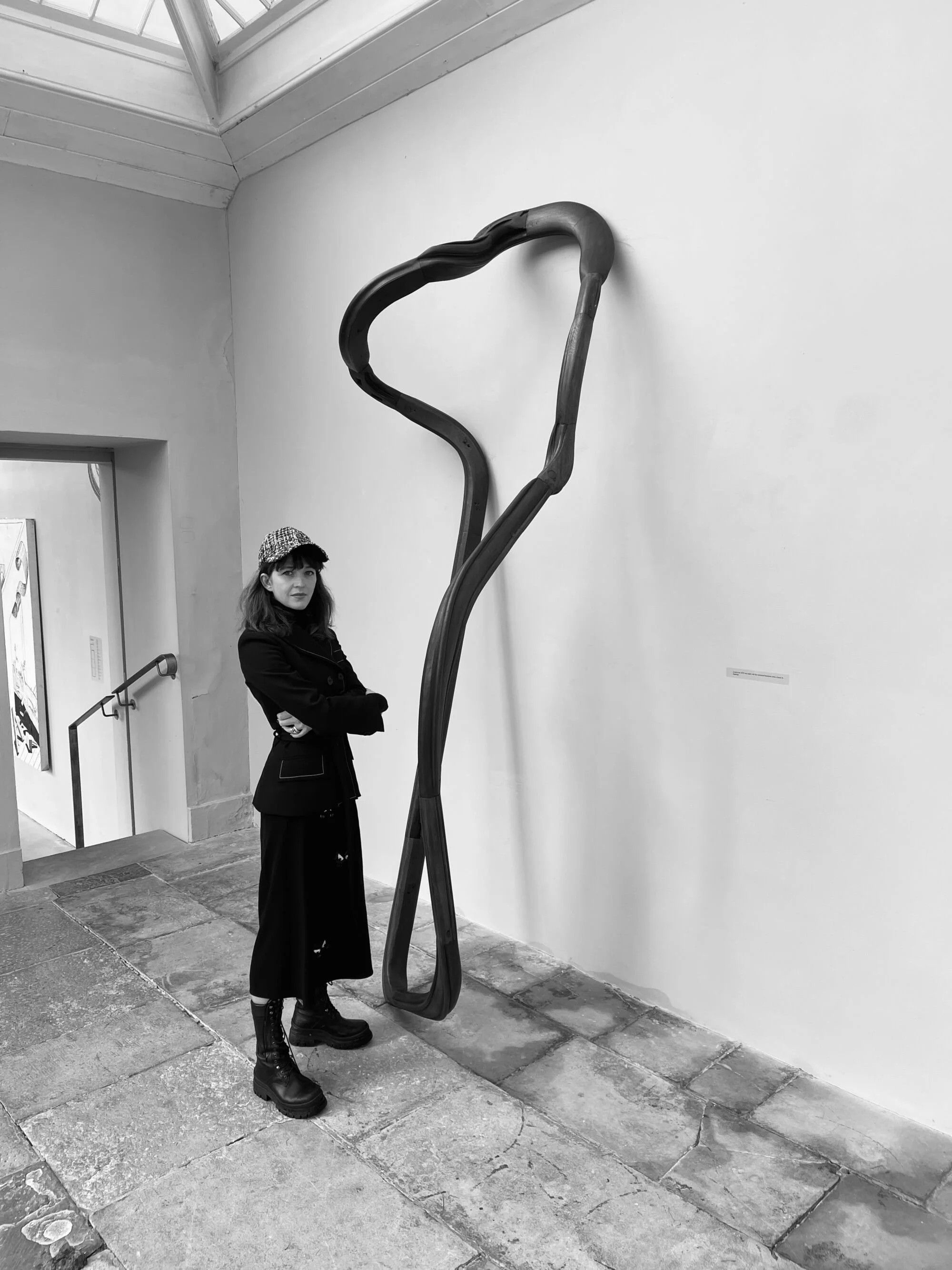
The Lemniscate series takes salvaged wooden bannisters from demolished houses and carves them into the mathematical symbol for infinity — the figure eight on its side. What was a stair rail, shaped by a century of human hands, is transformed into an abstract proposition about endlessness. Run your eye along the curve and you trace the ghostly imprint of every hand that gripped the original. These are portraits without faces, of people who are otherwise just dust.
Beghost — one of the most striking works in the exhibition and in Neelova's wider practice — takes roses and constructs them from fossilised shark teeth millions of years old. The life of a cut flower, measured in days, is married to deep geological time. The result is a form that holds both scales simultaneously, that makes the incomprehensible vastness of the earth's history intimate and floral and almost domestic. It echoes with medieval natural philosophy, with the wonder that ancient and medieval people brought to the unexplained objects they found in the ground. They did not know what fossilised teeth were. They called them dragon stones. They built cosmologies around them. Neelova is doing something similar, from the other side.
Her thinking moves easily from alchemy to ecology, from etymology to entropy. It is a practice formed by what she describes as the consciousness of matter — the conviction that wood breathes, that glass cracks with intention, that metal corrodes in ways that carry information. Everything has its own rhythm, its own agency. The sculptor's task is not to impose form on material. It is to attend carefully enough that the material's own form becomes visible.
Based on ancient Roman tear catchers used in burial ritual. Constructed from water-soluble glass with the artist's own tears sealed within. From the moment of completion, dissolving. A live performance of impermanence that is also a live performance of grief.
Wooden bannisters salvaged from demolished houses, carved into the symbol for infinity. A century of human hands preserved in the grain. Portraits without faces, of people who are otherwise just dust. They guide you, even in the absence of a body to hold them.
Roses constructed from fossilised shark teeth millions of years old. The fleeting week-long life of a flower married to incomprehensible deep time. Medieval myths of dragons and celestial events made intimate and floral and almost domestic.
Architectural elements salvaged and rebuilt so the absent body can still move through them. "When you reassemble a staircase, you choreograph the absent body into space." The ghost of the hand on the rail. The echo of the foot on the step.
Documentary interventions on landscapes under occupation. A visual record of checkpoints, barbed wire, and partitioned space that becomes its own form of preservation when the landscape itself is being transformed or erased.
The Paris exhibition that drew from her residency at Sir John Soane's Museum — itself one of the most temporally compressed spaces in England. A collapse of centuries into a single immersive moment. Presence and disappearance intertwined.
There is a particular quality in Nika Neelova's practice that is very easy to describe and very hard to experience without being changed by it
She works with things that have already had a life. Bannisters that have been gripped. Glass that has held liquid. Stone that has been walked on. Bone that predates the concept of a museum by several million years. And in every case, her intervention is the same: she attends to what the material already holds, and finds a way to make that holding visible.
The Lacrymatories dissolve in real time. The Lemniscate loops carry the imprint of hands that no longer exist. The Beghost roses hold the deep time of the ocean floor inside the short time of a flower's life. These are not metaphors. They are the actual thing they describe. That is rarer than it sounds, and it is why her work continues to arrive in the most charged institutional spaces — the Slade, the Soane, the Museum der Moderne Salzburg — and leave something behind in every room it occupies.
Explore her full practice at nikaneelova.com.
An independent platform dedicated to artists, musicians, photographers, designers, and thinkers at every stage, from emerging voices to established masters. Every interview is selected for depth, not reach.
✦ Explore all our interviews →"We need to support alternative films, art, any artistic form that challenges mainstream."
More personal essays and cultural commentary from Leila Antakly, on art, politics, wellness, and the complicated business of paying attention.
Read on Substack ↗