The Art Market in 2026: Where Commitment Meets Opportunity
The art world is experiencing a fundamental recalibration. As we move into 2026, Year of the Horse, following what many are calling the "shedding" of 2025's Year of the Snake, the Middle East stands at a critical inflection point.
With Art Basel and Frieze establishing their presence in the region and local institutions preparing to unveil significant collections, the question is no longer whether the Middle East matters to the global art conversation, but rather who will be left standing when the dust settles.
The arrival of major international fairs has undeniably amplified attention on the Middle East art scene. But attention without understanding creates its own problems. The region has seen an influx of galleries, dealers, advisers, and consultants who mistake visibility for engagement. This superficial approach risks becoming extractive rather than contributive. The proliferation of self-appointed gatekeepers, acting as filters between collectors and artists, threatens to flatten the richness and nuance that makes the region's art scene compelling in the first place.
In 2026, we believe we will see players are genuinely invested and not just merely passing through. Those who remain will be the ones who understood that success in this market isn't about making noise, it's about building relationships with patience and understanding the subtle dynamics of how artists, galleries, collectors, and institutions interact locally. This is based on conversations with gallerists, artists and collectors we’ve been speaking to all year long. After 2025's disorienting mix of gallery closures, economic uncertainty, we believe collectors everywhere are taking their time and thinking longer term. This feels healthy, even necessary.
Parallel to these regional dynamics, a quieter but equally significant shift is reshaping collector preferences globally: after a decade dominated by algorithmic polish and digital production, the most compelling work emerging in 2026 should and hopefully will reflect a commitment to the human hand. In a moment defined by technological acceleration and an oversupply of AI-generated perfection, collectors are gravitating toward art that is unmistakably made, marked by intuition and the imperfections that signal authentic authorship. Society is craving what is real. Within this landscape, we're also seeing expansion into surreal, psychologically charged imagery, art that delves into themes of identity, memory, and transformation. These works speak to our collective need to process an increasingly complex and destabilizing world through imagination rather than documentation.
The Accessibility Revolution
Another transformative trend reshaping the market is the continued growth of affordable original art. Works priced under $2,000 are thriving, and more collectors are purchasing directly from artists, especially online, creating a more accessible and personal art-buying experience.
This democratization is welcoming a new generation of collectors and opening sustainable career paths for artists who understand how to connect authentically with their audience. The gatekeepers are being bypassed, and the relationship between maker and collector is becoming more direct.
What 2026 Demands
The year ahead will require creativity at its best. We're operating in an environment where the economy must create the right conditions to support not just commercial vision but also artistic vision and audience development. For artists everywhere, the message is clear: collectors are not just buying art, they are investing in stories. So if 2025 was the year of shedding, of galleries closing, strategies collapsing, then 2026 should be the year of evolution. The hope is that we can move beyond endless conversations about AI and digital disruption (important as they are) toward tactical, human connection with art itself.
The Middle East will emerge as a more confident, more discerning market, led by collectors who know what they want and institutions ready to claim their place on the global stage. Internationally, the pendulum will continue swinging toward authenticity, craft, and toward work that restores a sense of humanity when authenticity itself has become scarce.
Those who understand that this moment demands patience, relationship-building, and genuine creative risk will find opportunity. Those who don't will simply move on to the next trend, leaving behind little more than the memory of their brief presence.
The art world in 2026 won't reward visibility alone. It will reward commitment.
Daniela Selva and Leila Antakly
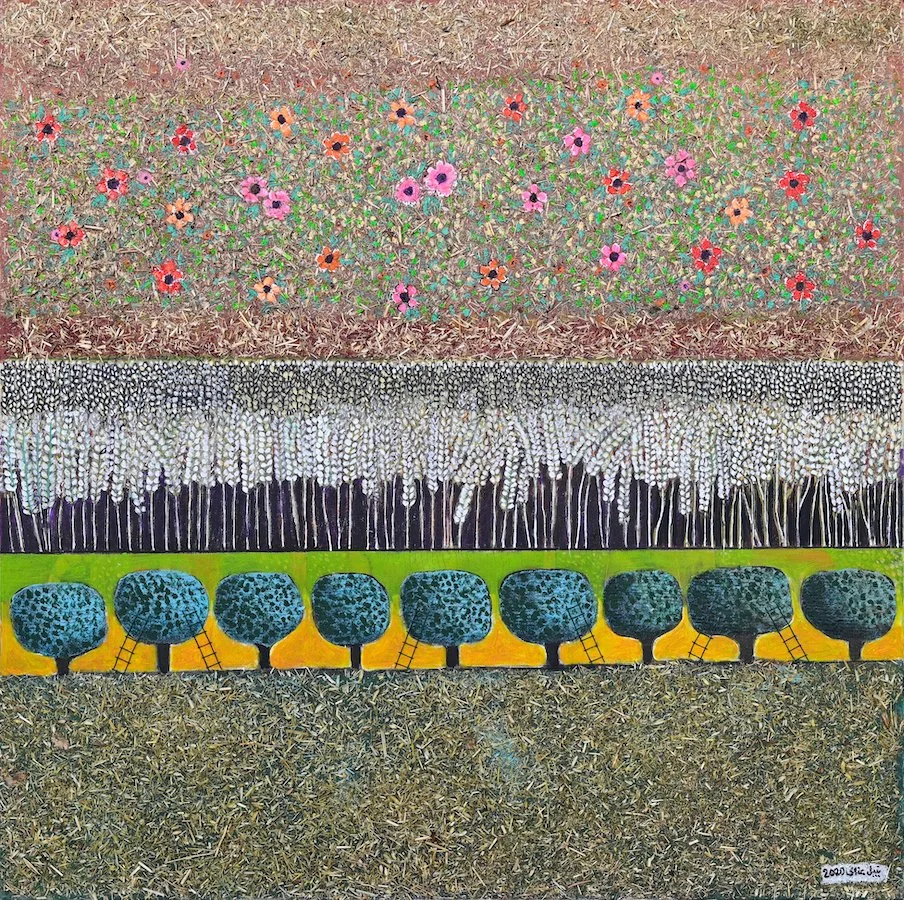
Cover Art: Olive Groves, Artist Nabil Anani, Zawyeh Gallery