IN CONVERSATION WITH HYPERREALIST OIL PAINTER STEVE MILLS
778 paintings placed in collections over a career. Up to 600 hours per canvas. A custom easel with an electric motor. A broken glass series born from an accidental gust of wind. This is what dedication to a single pursuit actually looks like.
Steve Mills is one of the most technically accomplished photorealist painters working today — and one of the most quietly obsessive. His canvases demand up to 600 hours of night-studio work, a custom motorised easel, and a willingness to find beauty in the exact moment something breaks.
Born in 1959, Mills grew up on Martha's Vineyard — a place he describes as both beautiful and culturally rich, instrumental in shaping his path as an artist. His early work was landscape painting, a natural response to that extraordinary environment. Over time, his focus shifted toward the domestic and the quotidian: newspapers, toy marbles, breakfast scenes, crossword puzzles, broken glass, board games.
His practice sits within the Photorealism tradition, but Mills experiences it more like a laboratory for exploring light, texture, and color than as a genre constraint. He builds paintings from back to front, layering depth the way a cinematographer layers focus. He paints primarily at night, listens to audiobooks for company, and goes to bed at sunrise.
Over a career spanning 34 years with Gallery Henoch in New York, Mills has produced 789 works — all but 11 have been placed in collections. This year his work will appear in a London book of Hyperrealist still life painters.
"I started to sweep up the broken glass and saw how amazing the light was on the glass — how really cool the shadows were. I was frustrated. Then I was not. Ideas can come from anywhere."
Your greatest inspirations or influences?
I grew up on Martha's Vineyard, which is such a beautiful place. In the beginning of my painting career I painted landscapes — it is also a very cultured and artistic community, which was very inspirational. My father was a musician and composer, so it was helpful growing up in a creative family.
Tell us about your creative process — from the moment of ideation.
As an artist, I know that coming up with an interesting idea is crucial for a successful painting. When an idea does come to mind, I work on turning it into an image that I personally like. This process can take some time — ideas sometimes don't progress to the next stage for years.
I usually paint on stiff substrates because I like to rest my hand on the surface while working. When painting larger than 4 x 8 feet, I use fine Belgian linen. The image I paint from is often made by melding together multiple photos in Photoshop to capture all the details.
I prefer to work at night when there are fewer distractions, and often go to bed at sunrise. I've even built a custom easel that can roll along the wall, with an electric motor that can move the painting vertically and rotate it 360 degrees to make it easier to work on larger, heavier paintings.
What does well-being mean to you?
To me, well-being means feeling fulfilled and in sync with my painting. It's the thrill of exploring new ideas and successfully bringing them to life on the canvas. When I need a break, I enjoy model railroading or working in my woodshop. Eating out is another favourite — whether with friends or alone, it allows me to be surrounded by other people and enjoy good food.
Anything else you'd like to share?
Funny story. The broken glass series came about when I was setting up a photoshoot of wine glasses in the sun on my driveway. A gust of wind came and blew the board off the platform and all 12 wine glasses shattered. Frustrated, I started to sweep up the broken glass — and saw how amazing the light was on the glass, how really cool the shadows were.
Ideas can come from anywhere.
and Shadows
A flagship piece for the exhibition's theme — light studied across spherical surfaces, shadows cast with the precision that 600 hours of night-studio work makes possible.
A domestic scene elevated to philosophical inquiry — the quotidian rendered hyperreal, the ordinary made extraordinary through sheer technical mastery.
Born at Art Miami, where Maurizio Cattelan's taped banana sold for $120,000. Mill's response: gather the great headlines — the banana, the $450M Da Vinci, Beeple's NFT — into one epic, letter-perfect painting.
The title Reflections and Shadows is a fitting one. Most paintings in the show have different themes — marbles, Wall Street Journals, broken glass, board games — but what brings them together is the play on light. In each work, Mills investigates a new way to do that. Some works use subtle textures against smooth surfaces; others use the contrast between the lightest and darkest colours to tell the story.
This is Mills's first solo show with Gallery Henoch since 2010 — four years in the making. It represents not just a body of work but a philosophy: that meticulous attention to the world as it actually looks is itself a form of meaning.
Discover more artists chosen for their ideas,
not their visibility.
Antakly Projects is an independent platform dedicated to artists, musicians, photographers, designers, and thinkers at every stage — from emerging voices to established masters. Every interview is selected for depth, not reach.
"Few moments are as rewarding as when the paintings you've worked on in private are so well received by the greater public."
More essays and cultural commentary from Leila Antakly — on art, creativity, and the world we're paying attention to.
Read on Substack ↗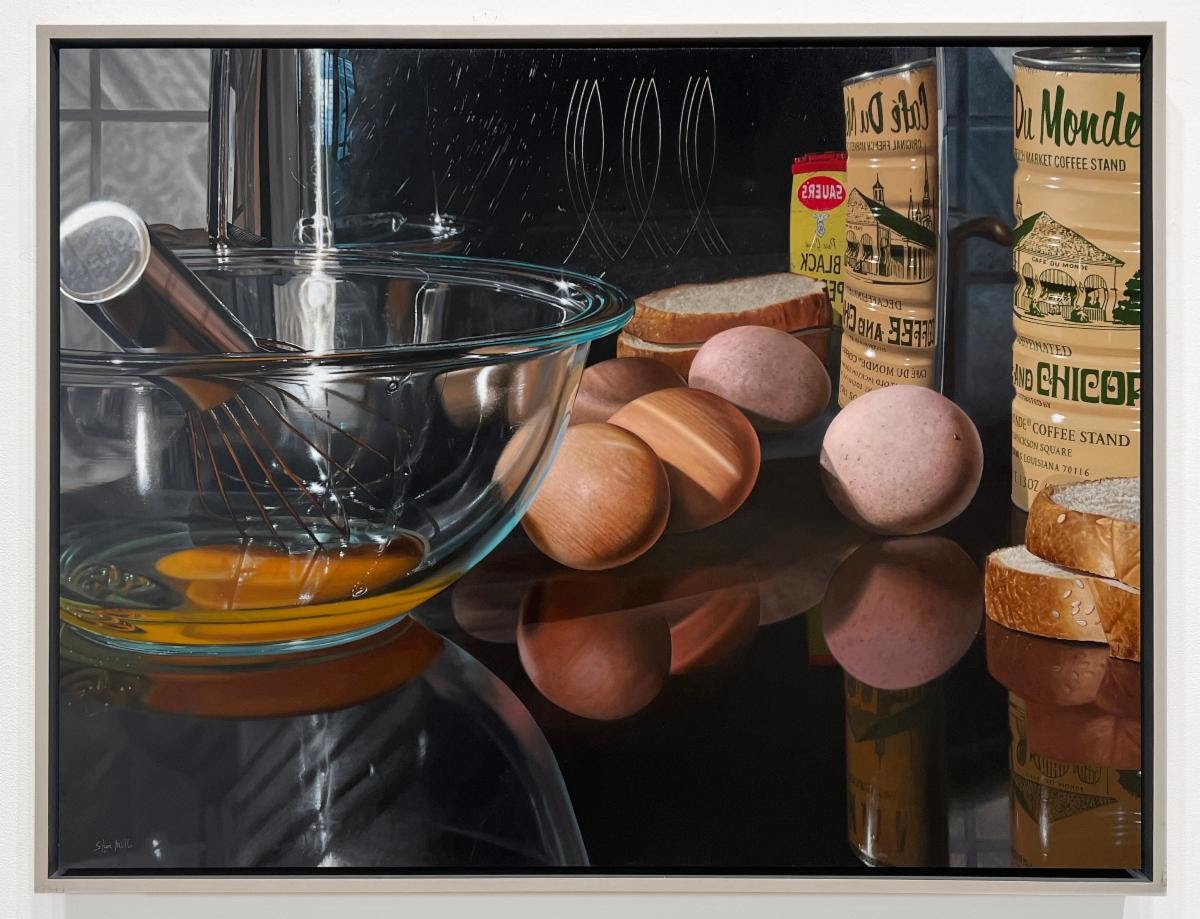
BREAKFAST FOR TWO, 2022
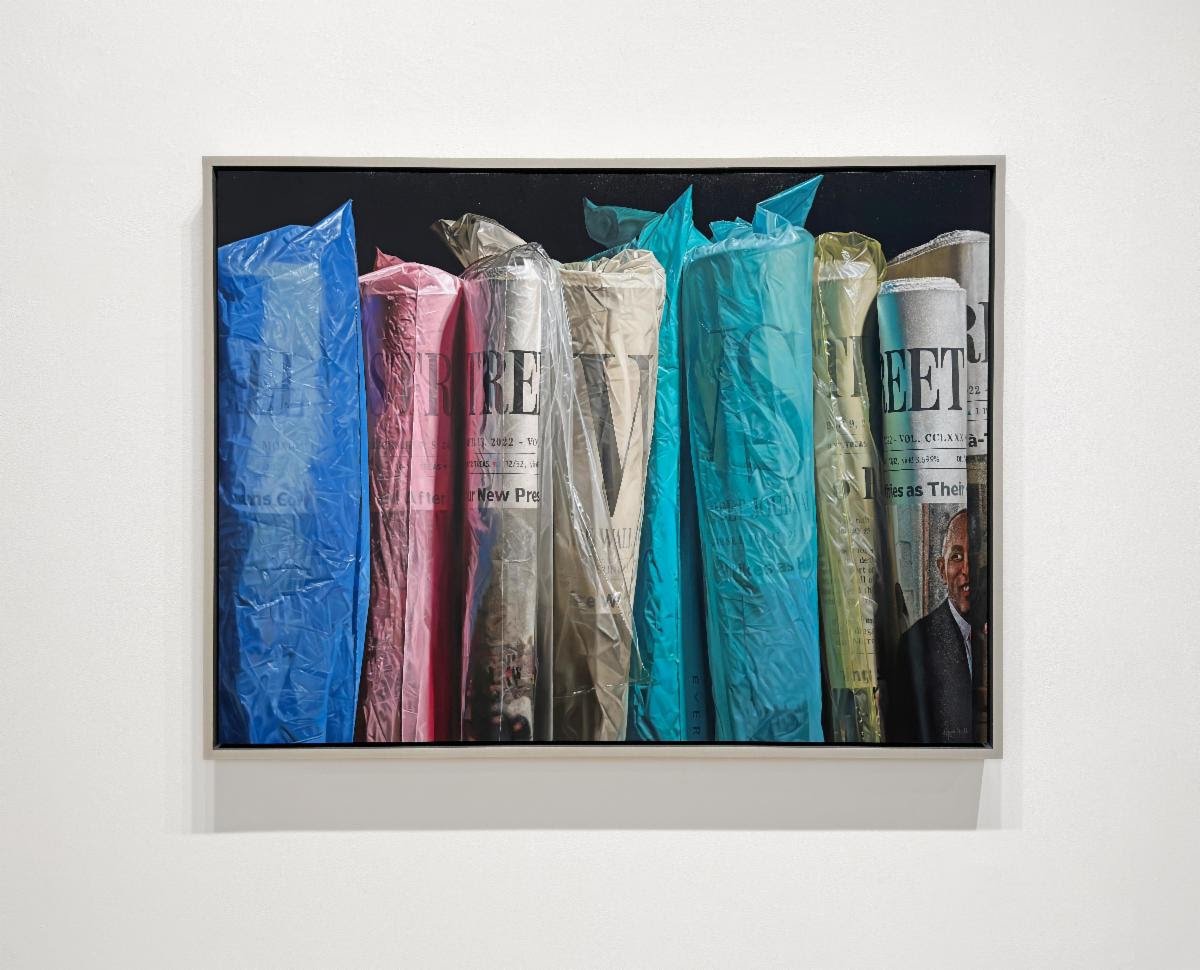
COLORFUL NEWS, 2023,
Oil on Panel,
36 x 48 in., 91.4 x 121.9 cm., Courtesy of Artist and Gallery Henoch