PIANIST KAI SCHUMACHER ON THE POWER OF JULIUS EASTMAN
Delighting in pushing the boundaries between classical and contemporary music — combining incompatible elements with surprising results, and never once falling into crossover clichés.
Eastman
—
1990
Born in 1940, Julius Eastman broke with convention time and time again. A gay African-American, he was not afraid to speak of his roots and his sexuality at a time when both carried enormous personal risk.
At the time of his death he was homeless and his music completely overlooked. Yet today he is considered a cornerstone of minimalist music — his unorthodoxy and power having lost none of their force.
Eastman gave his compositions deliberately provocative titles — Gay Guerrilla, Evil Nigger, Crazy Nigger — as acts of radical self-naming, reclamation, and artistic integrity.
Kai Schumacher fell between classical and contemporary, too progressive for traditionalists, too serious for popular culture. That gap became his niche — and his freedom.
Studying at the renowned Folkwang University Essen under Prof. Till Engel, Kai passed his Konzertexamen with distinction in 2009. But his real musical journey began earlier — with grunge, punk, and a piece by Frederic Rzewski that changed everything.
This May, Kai and three other pianists — Patricia Martin, Mirela Zhulali, and Benedikt ter Braak — gathered at the Moers Festival to perform the music of Julius Eastman. A profound act of remembrance, performance, and political commitment.
"I felt too superficial for the contemporary music hardliners, too progressive for the classical traditionalists, but still too serious to be part of popular culture. Falling between these schools became my niche."
Kai SchumacherWho or what inspired you to take up the piano and pursue a career in music?
When I was a teenager, I never thought of pursuing a career as a pianist. I used to play a lot of classical and romantic piano repertoire but just for the personal joy of playing. I was much more into rock and punk music. The life of a classical musician seemed quite boring and bourgeois to me.
At the time, I didn't know about genres like minimalism or electro-acoustic music. I never imagined that there could be "classical" composers out there influenced by the same music as me.
Your greatest inspirations or influences?
The first musical influence I can remember was Kurt Weill's Threepenny Opera. As a little kid I would be walking around our living room table and singing along to the lyrics without really understanding a single word.
Then Grunge, Heavy Metal and Punk came along as a teenager — which made me realize that being a rock star could be much more fun than being a classical pianist. But Rzewski changed everything.
As a performer I started to focus on American avant-garde composers — and the minimalists:
Tell us about Julius Eastman's compositional style and why you chose his pieces for this project.
As a big fan of minimal music, the name Julius Eastman kept popping up in my circle. But it took me some time to look closely at his work. It was not only the music that fascinated me but also his whole biography — his uncompromising struggle for artistic integrity and his political activism.
We finally made it happen at this year's Moers Festival with our friends and marvellous pianists Mirela Zhulali and Benedikt ter Braak.
What are the biggest challenges of the music industry today?
I see a great risk in what I'd call the "Spotify mentality." Music becomes a cheap commodity, available every time and everywhere for a bunch of pennies. The big streaming platforms are playing a dangerous game — and unfortunately, artists are forced to join, otherwise they'll disappear from the scene.
What would be a dream project for you?
I'm very thankful that during 2020 two heartfelt projects came together. Not only our Eastman album, but also a Schubert project with German singer/songwriter Gisbert zu Knyphausen — two years in the making. We put songs from Winterreise and Schwanengesang in a new shape, re-composing them for a chamber ensemble of piano, acoustic and electric guitar, trombone, double-bass, drums and string quartet, scraping off the artificial pathos of artistic singing.
Each work begins from the smallest possible element — a single note, stoically repeated over and over, gradually producing a drone-like soundscape from the chords and textures that accumulate around it.
Each new section contains all the information from the previous sections — but adds a new aspect. The music grows organically, never discarding what came before.
Eastman gives players almost complete freedom. Instead of a rigid straitjacket of bar units, the music follows a loose time axis of minutes and seconds. Instead of a fully notated score — an array of patterns played as intuition dictates.
Every performance of these works is a kind of unique snapshot bordering on improvisation. The same score — a different piece, every time.
"I liked the idea of being kind of intangible for the audience — it gave me the opportunity to reinvent myself with every new project or album. But that's sometimes a long journey."
Kai Schumacher
Discover more artists chosen for their ideas,
not their visibility.
Antakly Projects is an independent platform dedicated to artists, musicians, photographers, designers, and thinkers at every stage — from emerging voices to established masters. Every interview is selected for depth, not reach.
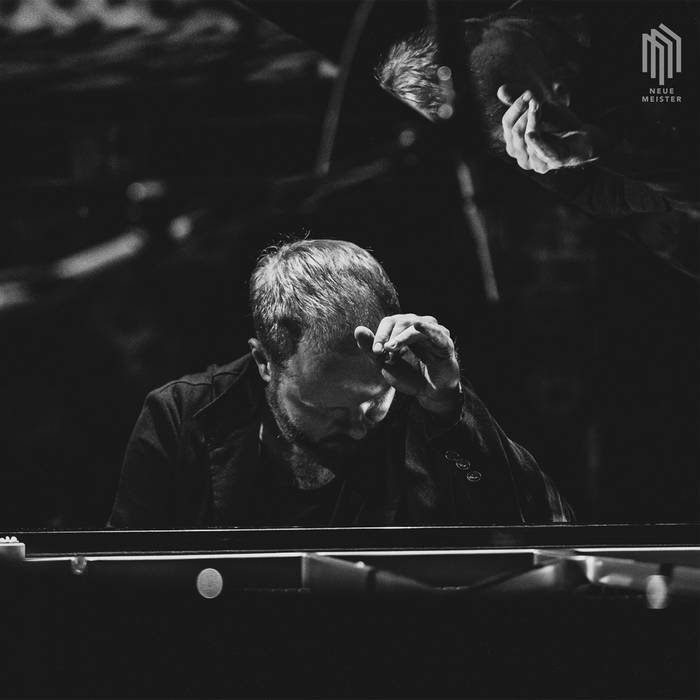

Julius Eastman, an American composer, pianist, vocalist, and dancer whose work fell under minimalism.