Desire
Moheb-Zandi
b. 1990, Berlin · Iranian · Uzbek-Turkish roots · Istanbul · New York · Paris
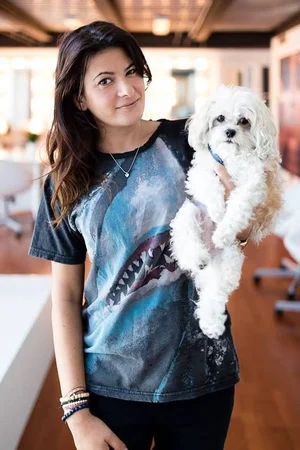
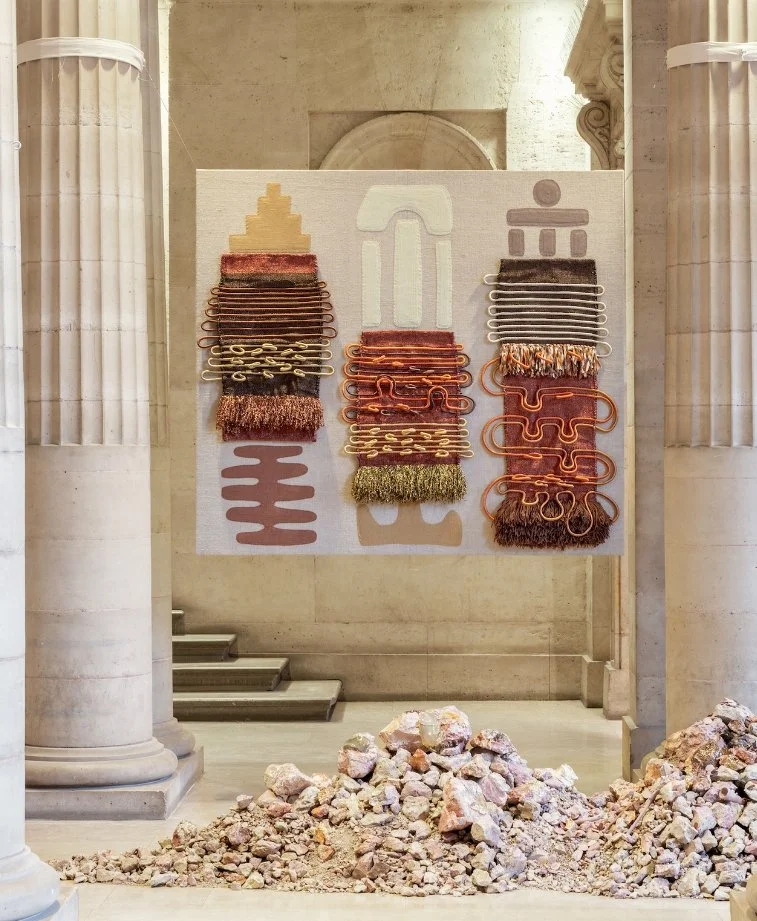
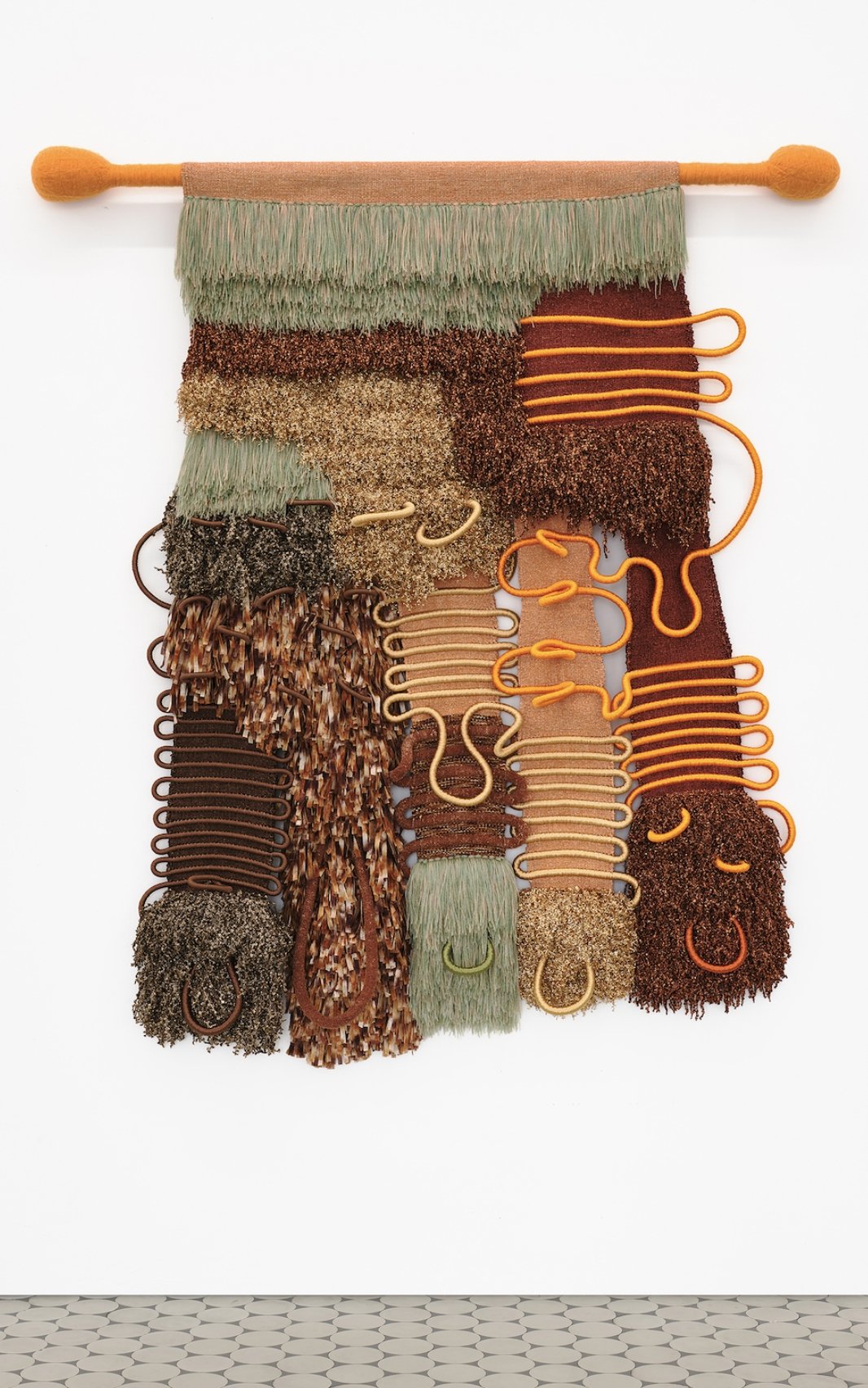
She puts rubber tubing, acrylic dowels and synthetic netting through an ancestral loom. The loom as analogue computer. The code is her pattern. The pattern breaks the rules — and with them, the traditional role of women in society.
Proud participant in the UPRISE/ANGRY WOMEN female group show — 80 female contemporary artists responding to the social and political climate. Currently exhibiting at Max Mara, New York, with collaborative works alongside French artist Ugo Schildge.
Since a young age Desire Moheb-Zandi has been fascinated by textures and craftsmanship. Her curiosity started as a kid watching her grandmother weave for hours in Turkey. Today she puts rubber and plastic through that same loom — and calls it exactly what it is.
"My practice centres on weaving as both a physical process and a conceptual framework — a way to think through rhythm, repetition, and transformation. I combine natural fibres, upcycled yarns, and unconventional materials to create abstract, tactile compositions that explore identity, memory, and cultural heritage."
"German-born with Iranian and Uzbek-Turkish roots, I grew up between cultures — an experience that shapes my interest in textiles as vessels of cultural memory and ecological consciousness. The slow, tactile rhythm of weaving is central to my process: a meditative yet experimental space where structure, surface, and meaning continuously shift."
How did this practice begin?
After experimenting with various materials, Desire decided to focus on textile — inspired by the image of her grandmother weaving in Turkey. But where tradition saw domesticity, she saw an opening. By weaving with unorthodox materials and techniques, she began to break the traditional role of women in society, using textile art as a symbolic image to examine gender and domesticity across history.
"The idea of making a cloth is so traditional, but with the materials, it became more about experimentation and material research. I'm kind of rough with the loom — a professional weaver would never put the materials I do through the age-old process."
- Natural wool
- Ancestral loom
- Traditional technique
- Inherited knowledge
- Rubber tubing
- Acrylic dowels
- Synthetic netting
- Shiny plastic vinyl
"The loom as analogue computer — the code is her pattern, and her manipulation of the pattern creates optical resonance and movement."
Some career highlights so far?
"I am currently working with my talented French artist friend Ugo Schildge, and we are creating one-of-a-kind works of art and design together. Our first piece is currently exhibited at Max Mara in New York. I recently had a show at the Students Art League, thanks to my mentor Ronnie Landfield."
She was also proud to be part of the UPRISE/ANGRY WOMEN group show — featuring 80 female contemporary artists responding to the current social and political climate, curated by gallerist Indira Cesarine.
"Yes I did march! I marched for all the mothers and grandmothers who fought this battle all their life. I marched for fundamental human female rights everywhere, for gender equality, for the LGBT community, for our planet — and the list goes on."
"It was wonderful to march with all these women from so many different backgrounds, and it was so empowering. It made my heart race. We need activists and feminists more than ever."
"Softness and structure coexist — and hierarchies between painting, sculpture, and tapestry collapse."
Explore her work at desiremohebzandi.com ↗
You will also love
From the Antakly Projects archiveBrazilian-French cellist and composer whose music carries the same tension between ancestral and contemporary that runs through Desire's textiles.
Read on Antakly Projects ↗ Design · FashionDesigner whose practice interrogates material, form, and the politics of what we wear and how we make things. A conversation worth revisiting.
Read on Antakly Projects ↗ Art · Textile · ConceptualTextile and conceptual artist on cloth as metaphor, the body as loom, and what fabric carries that other materials cannot.
Read on Antakly Projects ↗Antakly Projects — originally Ninu Nina — has been in conversation with artists, designers, musicians and activists from around the world since 2003. Desire Moheb-Zandi's practice is exactly why this platform exists.
And for the personal rants, opinions you didn't ask for, and the occasional existential spiral: follow me on Substack.
We need activists and feminists more than ever. ✦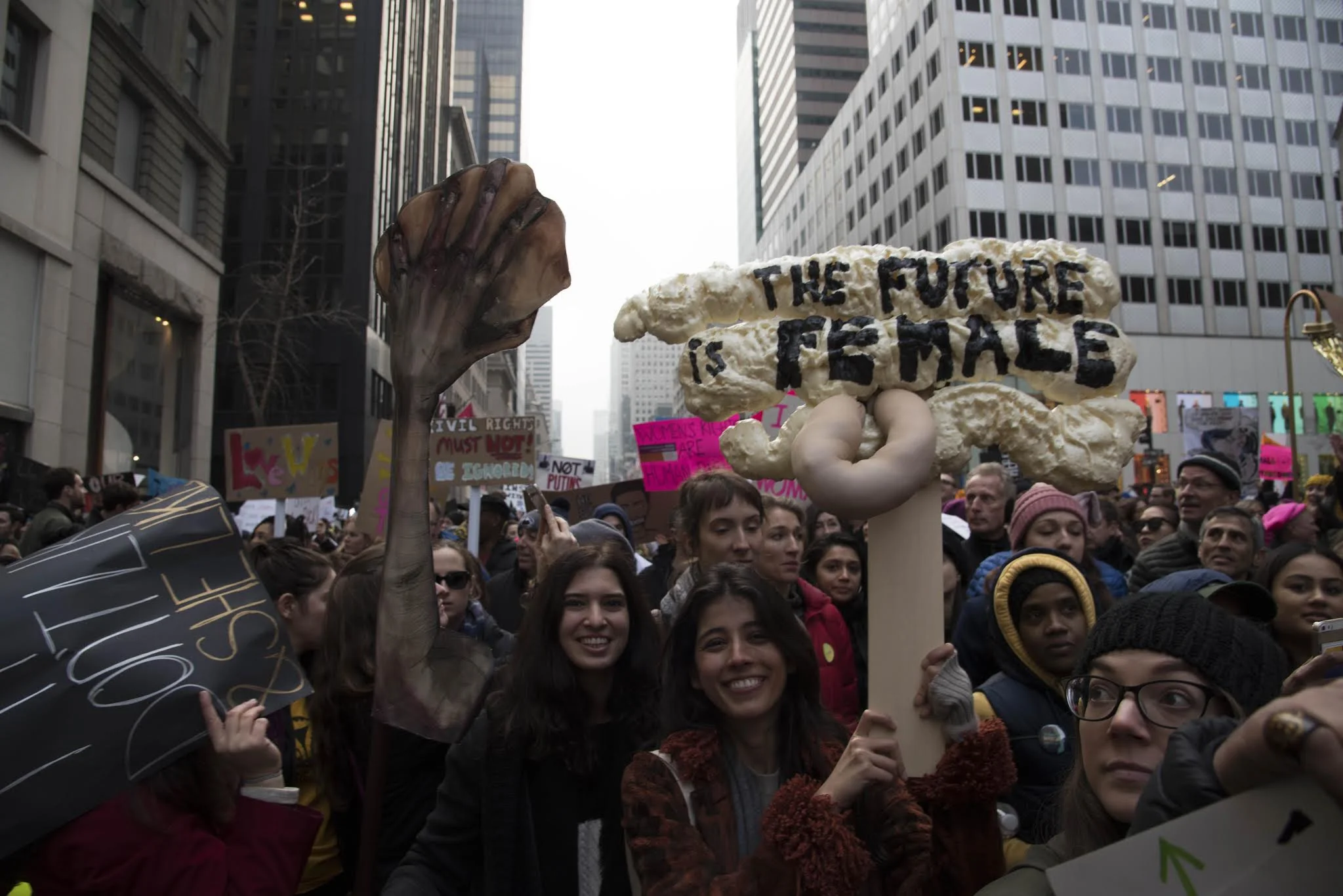
PHOTO ARDA ASENA

CHAOS Untitled Space