THE SECRET LIFE OF SYRIAN LINGERIE
The Secret Life of
Syrian Lingerie
I grew up wandering the souks in Damascus. The neon lights of the lingerie shops, the nightgowns and more, the sheer extravagance of it all in the middle of the ordinary — these things left some kind of impression on me that I carried for years without quite having the language for it. Then I spotted a book at the Beirut airport and immediately bought several copies to give as gifts. The title alone was enough. It was completely insane and I loved it.
The most outrageous and exuberant lingerie in the world comes from a place you would probably never expect: Syria. I knew this before I knew I knew it, from the long afternoons of childhood spent in the covered markets of Damascus, past the stalls where these items hung in their impossible glory, lit up and feathered and somehow entirely serious in their commitment to excess. No one was embarrassed. No one was hiding anything. The displays were right there, in the souk, in the ordinary course of daily commerce, flashing and frilled and occasionally emitting sound.
This is what I mean when I say some cultural observations take time to land. You absorb something as a child and carry it without the vocabulary to describe it, and then one day a book appears on an airport shelf and gives you both the description and the permission to find the whole thing as delightful as you always secretly did.
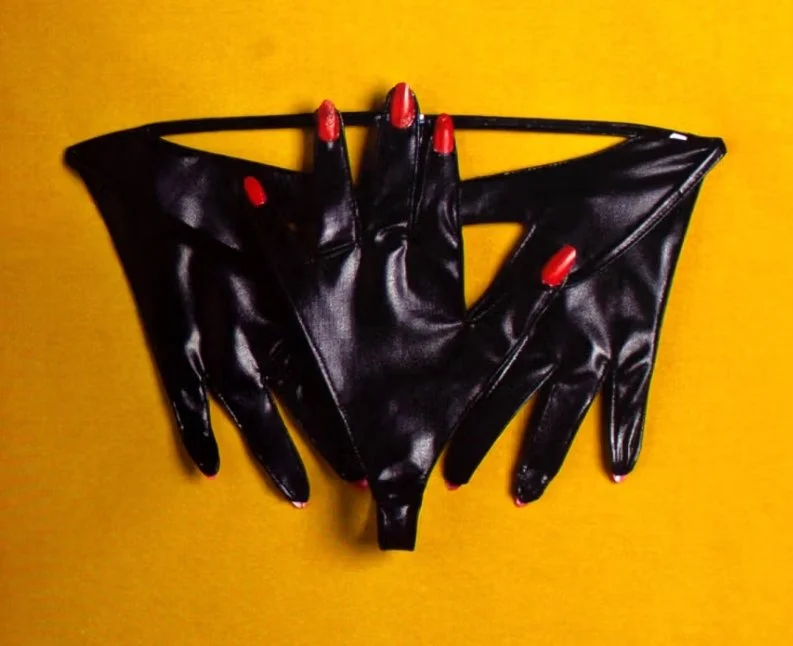
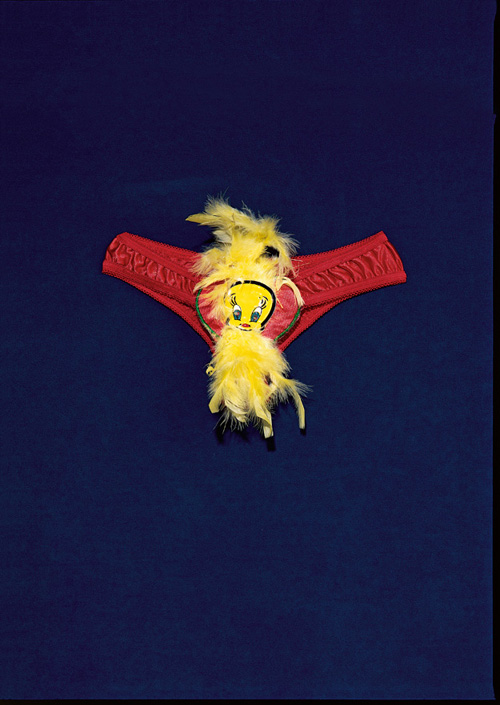
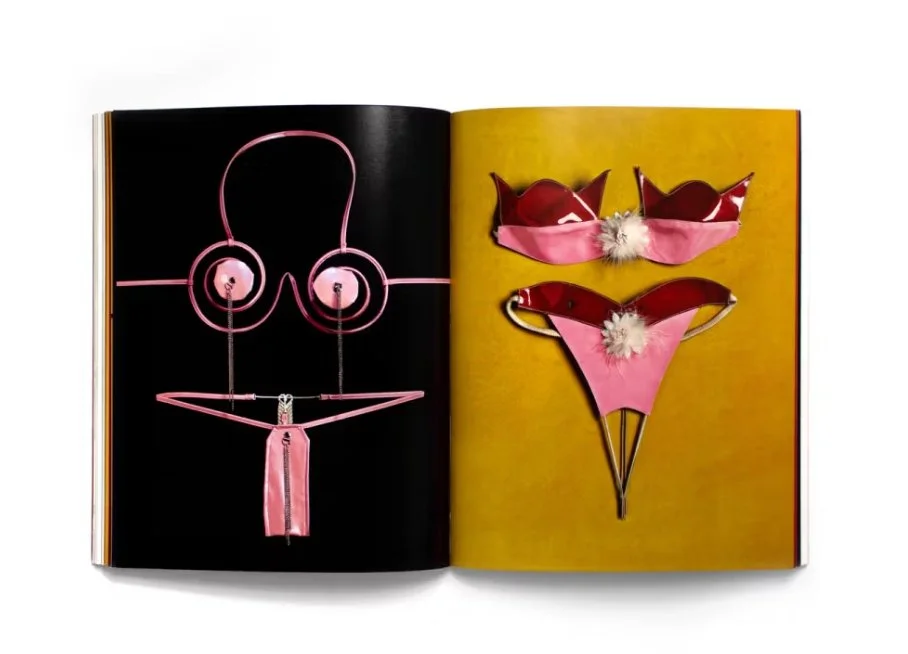
Found at the Beirut airport. Bought in multiples for gifts. A diverse and dramatic collection of photography and writing, including the voices of Syrian women, celebrating this little-known niche of fashion design in all its playful glory. It is also, just by existing, one of the most culturally precise documents of a Syria that no longer exists in the same form. The book celebrates not only the lingerie itself but other design aspects of Syrian culture: traditional textiles, imagery of women in traditional illustrations, prints, and popular packaging. Fashion catalogue meets visual anthropology.
The history of Syrian-made lingerie, as Halasa and Salam document it, is inseparable from the country's economic transformation after the Yom Kippur war of 1973. Before the days of outrageous underwear, Syrian women wore imported bras and cheap, ill-fitting cotton vests. Then the domestic industry arrived, and it arrived with complete conviction. Home-grown lingerie began competing with transnational brand names as a coveted commodity, found everywhere from shopping complexes to hairdressing salons to the souks across the country and its neighbouring regions.
In Syria, the lingerie forms an important part of the folk tradition around trousseaus and weddings. It is openly displayed in the markets. There is nothing hidden about any of it. The display is the point. The extravagance is the point. And the extravagance is genuine — not mass-market excess but a specific, handmade, locally produced tradition of making undergarments that flash lights, play music, and in at least some documented cases, vibrate.
"Working-class women tend to distinguish themselves from so-called 'posh' women who are considered boring in bed and pretentious."
What Halasa and Salam capture so precisely is that the lingerie is a social document as much as a garment. Class distinctions are literally sewn and sequined into the design. Working-class women distinguish themselves from posh women who are considered boring in bed and pretentious. The choice of lingerie, determined by means of pictures from catalogues by Syrian producers and manufacturers, is a form of self-declaration. You are telling a story about yourself by what you choose to wear underneath everything else.
The catalogue system itself is a subject. As Syrian women do not pose as lingerie models, the catalogues are photographed on Eastern European models who are instructed to take poses that are as asexual and innocent as possible, to prevent being considered provocative. So you have this situation where the most exuberant undergarments in the world are photographed in the most decorous possible way, and the mouth-to-mouth advertising that actually drives sales happens in the hairdressing salons and the souks and the conversations between women that no catalogue can fully replicate.
What I find most moving about this, looking back, is not the extravagance — though the extravagance is genuinely wonderful — but the pride. There was nothing apologetic about those souk displays. No sense that this was a lesser form of design, a folk tradition to be embarrassed by, a thing to be kept out of sight. It was right there in the market, between the spices and the textiles, lit up and proud and completely itself.
The Syria in which this tradition flourished is not the Syria of now. The Damascus I wandered as a child is not intact. The souks are not all standing. The book, which I still give as a gift when I can find copies, has become something it perhaps was not designed to be: a form of cultural preservation, a document of a place and a practice and a particular form of female ingenuity and humour and self-expression that existed, fully and unapologetically, in a country that the world now knows mostly through its suffering.
I want to say something about that without being heavy about it. The feathered birds and the toy cell phones and the flashing lights are not less important because they existed in a country that has since been devastated. They are more important. They are the evidence that there was a culture here — eccentric, inventive, female, funny, and proud of itself — before the war. The Secret Life of Syrian Lingerie is a love letter to that culture. I am glad it was written. I am glad I found it at the Beirut airport. I recommend buying several copies.
An independent platform dedicated to artists, musicians, photographers, designers, and thinkers at every stage, from emerging voices to established masters. Every interview is selected for depth, not reach.
✦ Explore all our interviews →"We need to support alternative films, art, any artistic form that challenges mainstream."
More personal essays and cultural commentary from Leila Antakly, on art, politics, wellness, and the complicated business of paying attention.
Read on Substack ↗