Exploring the Depths of Human Expression: A Conversation with Swedish Documentary Photographer and Filmmaker
Sara Herrlander's Camera Is a Way of Staying in the Conversation
Sara Herrlander didn't pick up a camera to make art. She picked it up to ground herself. The Swedish documentary photographer, visual artist, and filmmaker — now based in Berlin — spent years working out what her fingerprint actually was, building a body of work in the space between documentary and intimacy, between the fragile and the uninhibited. What emerged is a practice defined by genuine connection, a recurring cast of collaborators, and an ongoing honest dialogue with the people and places that let her close enough to look. We spoke to her about skin, anxiety, Swedish summer habitats, and the very unswedish act of saying out loud what you want.
Interview by Leila Antakly
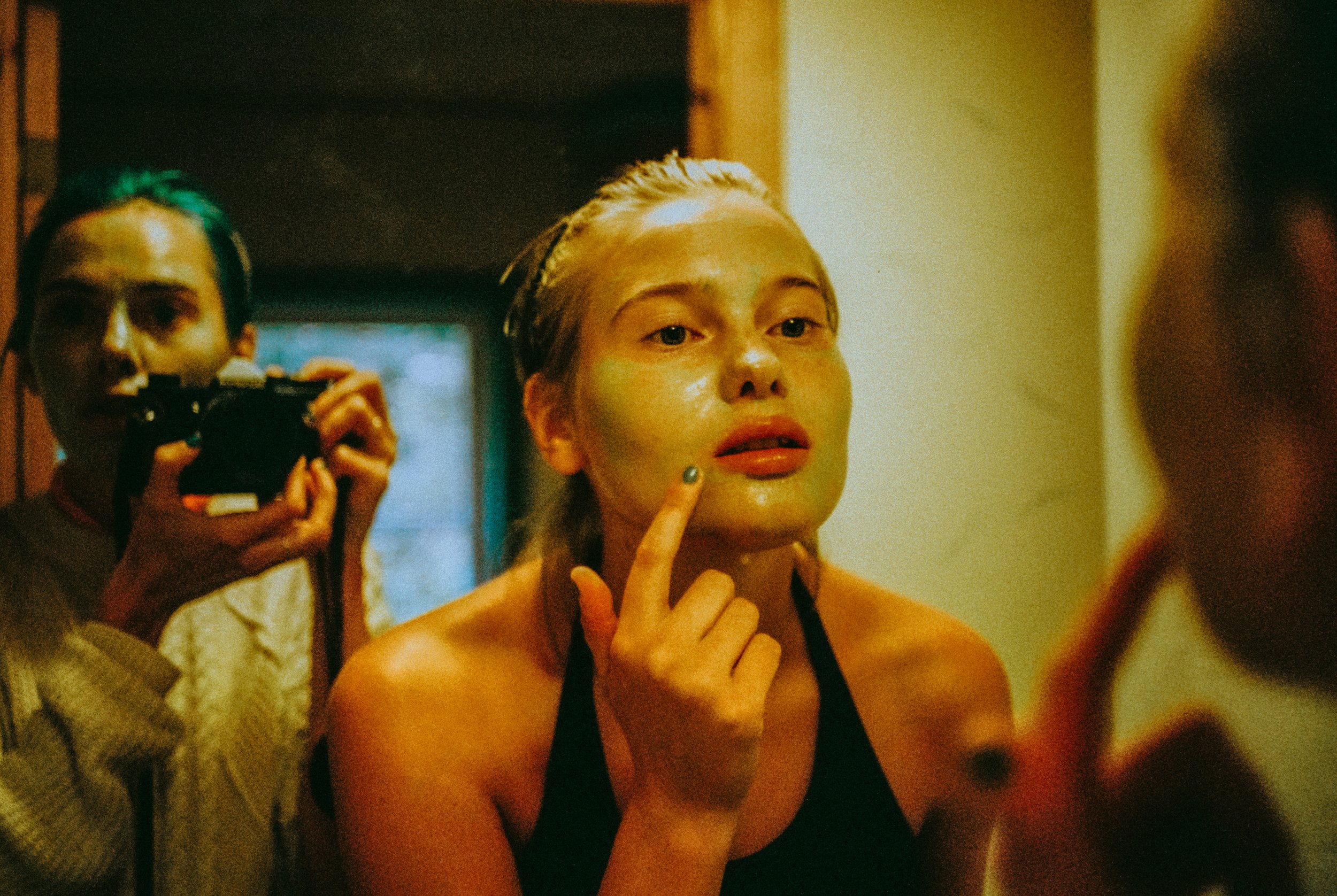
There is a particular kind of photographer who is also, quietly, a portraitist of trust. Sara Herrlander is that kind. Her images — naturalistic, fragile, defined by a colour palette that took years to crystallise — are only possible because of what happens before the shutter. The conversation. The closeness. The long process of becoming someone the subject doesn't perform for.
Her three-year collaboration with contemporary dancer Sebastian Abarbanell on the production Home is the clearest expression of this. Not a project about capturing movement — a project about what the human body carries when it stops being watched. Emotions, thoughts, the weight of interiority made briefly visible. In November 2022, a selection from the series was exhibited alongside a durational performance by Abarbanell at Exgirlfriend Contemporary in Berlin, and the work found the kind of audience that goes quiet in front of images rather than explaining them.
The influences she names — Nan Goldin, Ryan McGinley — are the right ones, in the sense that they point toward something true about what she is doing. Both photographers built their most essential work inside genuine relationships, inside communities they belonged to rather than documented from outside. But Herrlander is quick to locate her deepest inspiration elsewhere.
"The greatest inspiration comes from the people around me."
It is a simple thing to say and a difficult thing to actually mean in practice — to let the work be genuinely dependent on proximity and dialogue rather than on concept or intention. Her portfolio is the evidence that she means it.
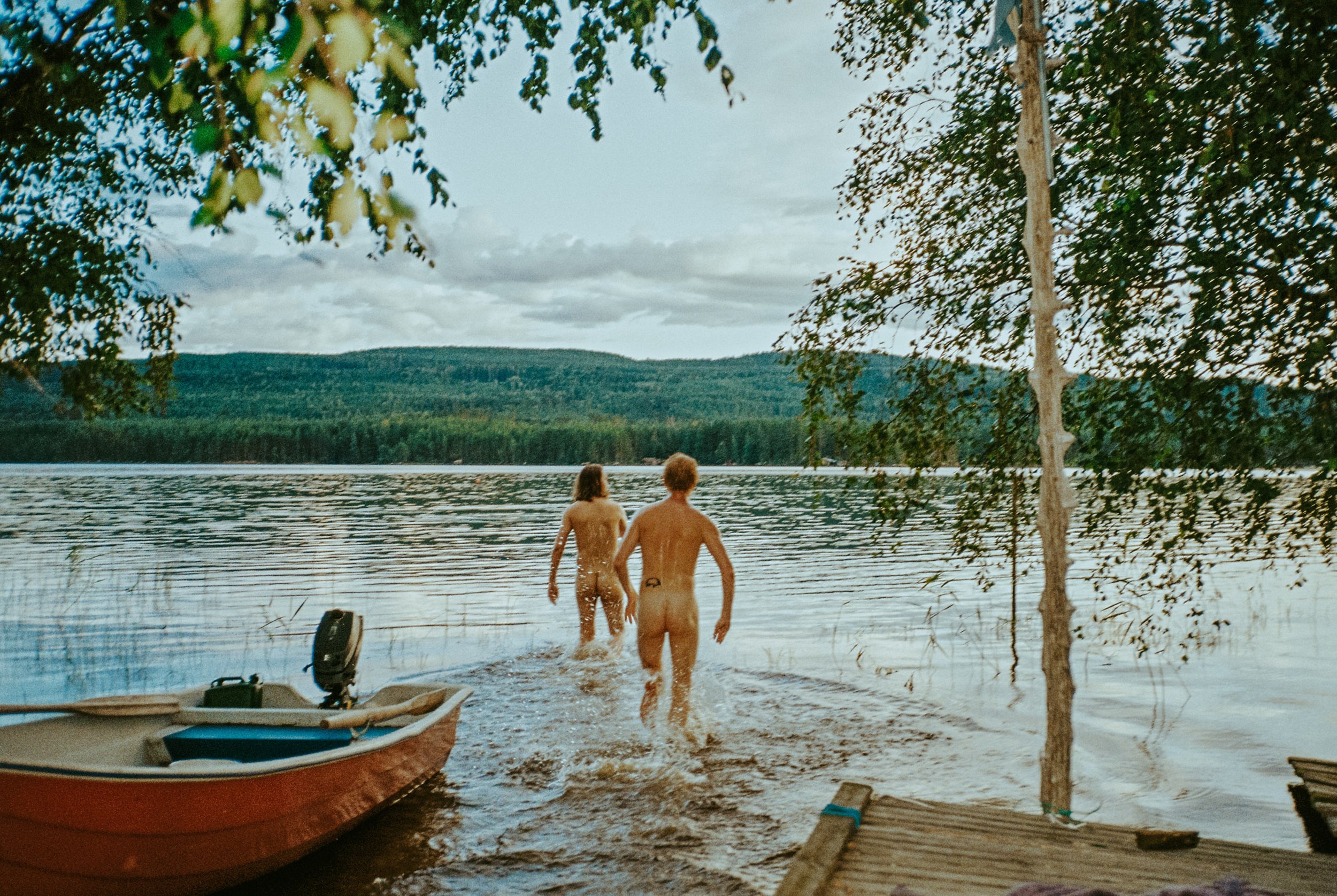
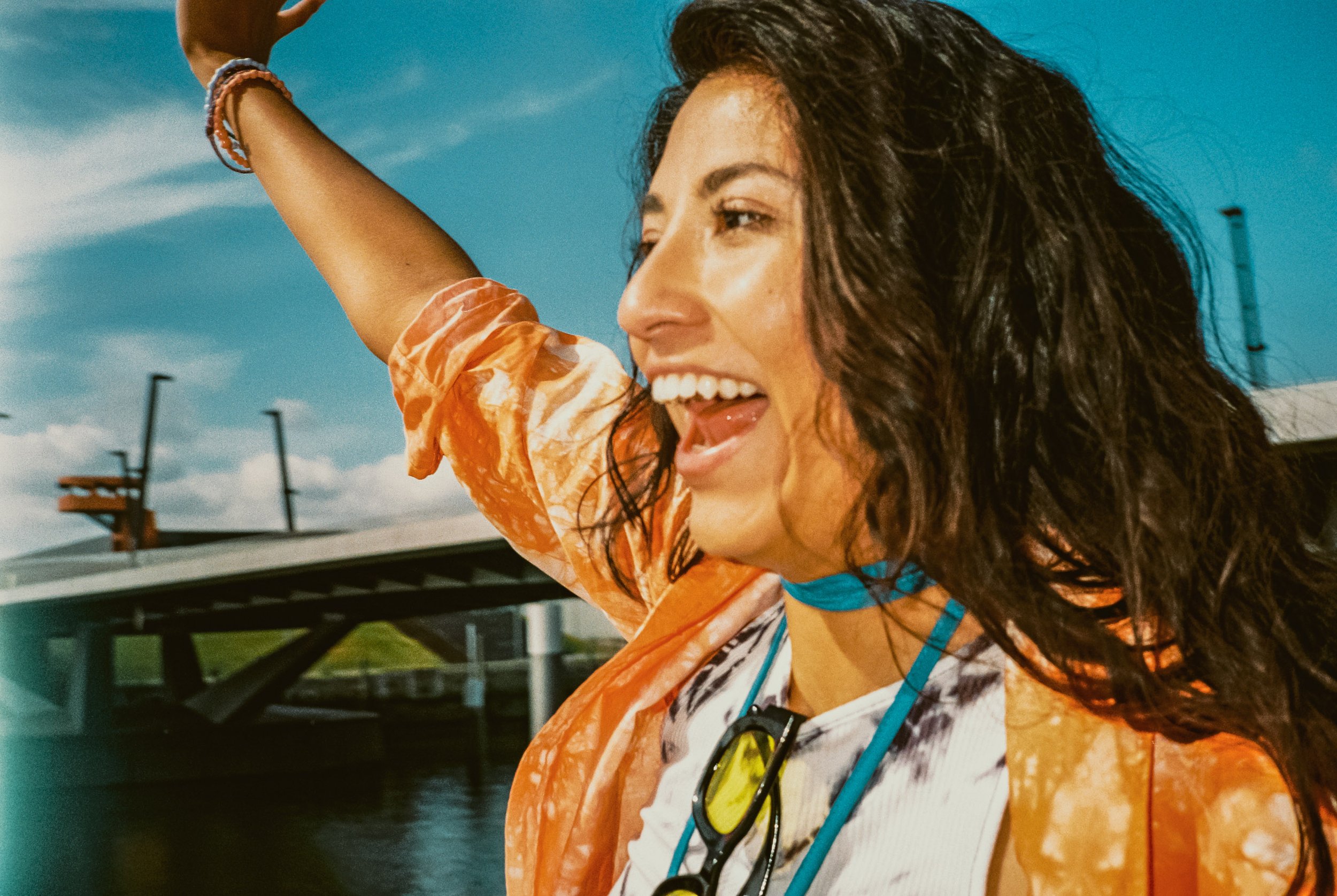
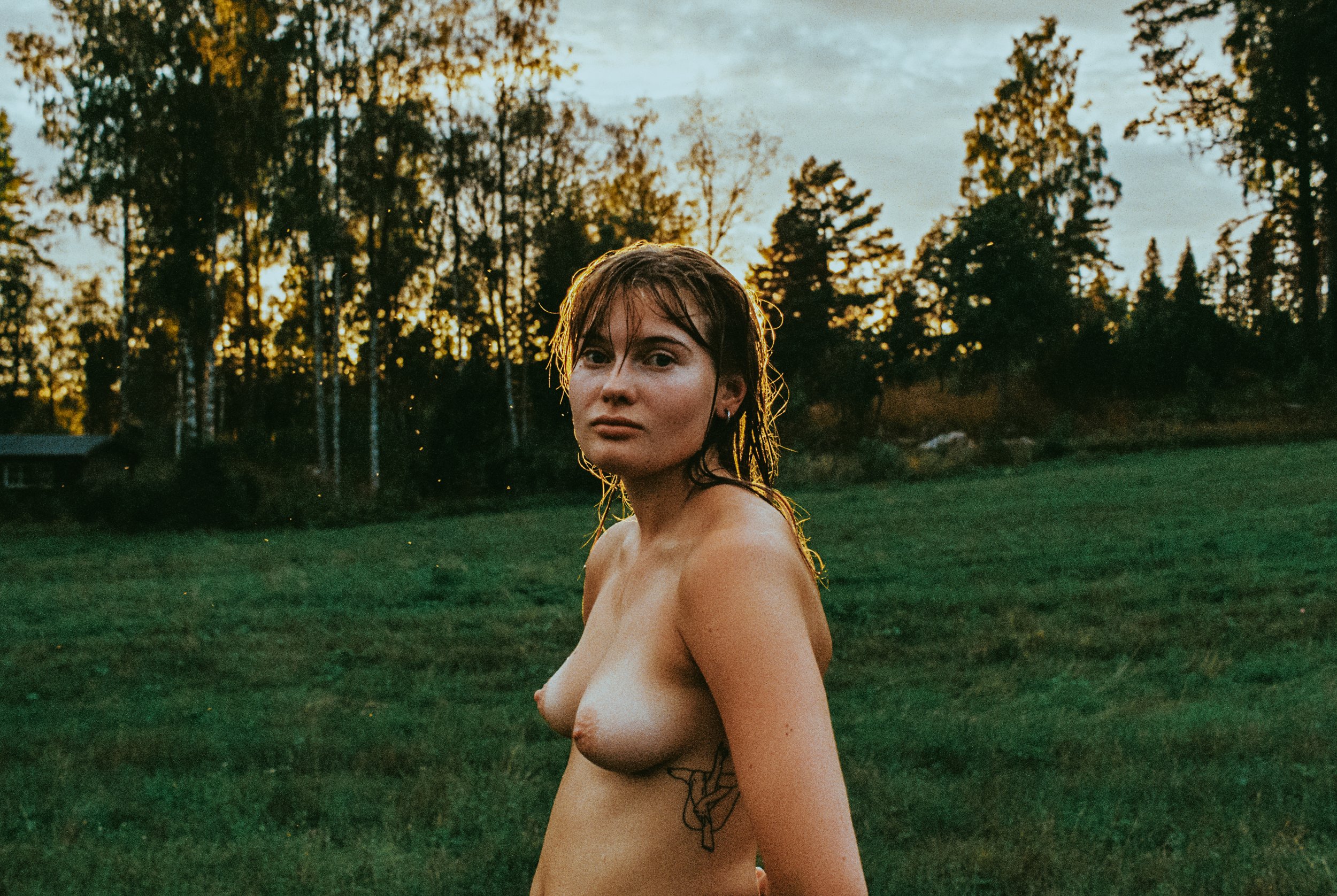
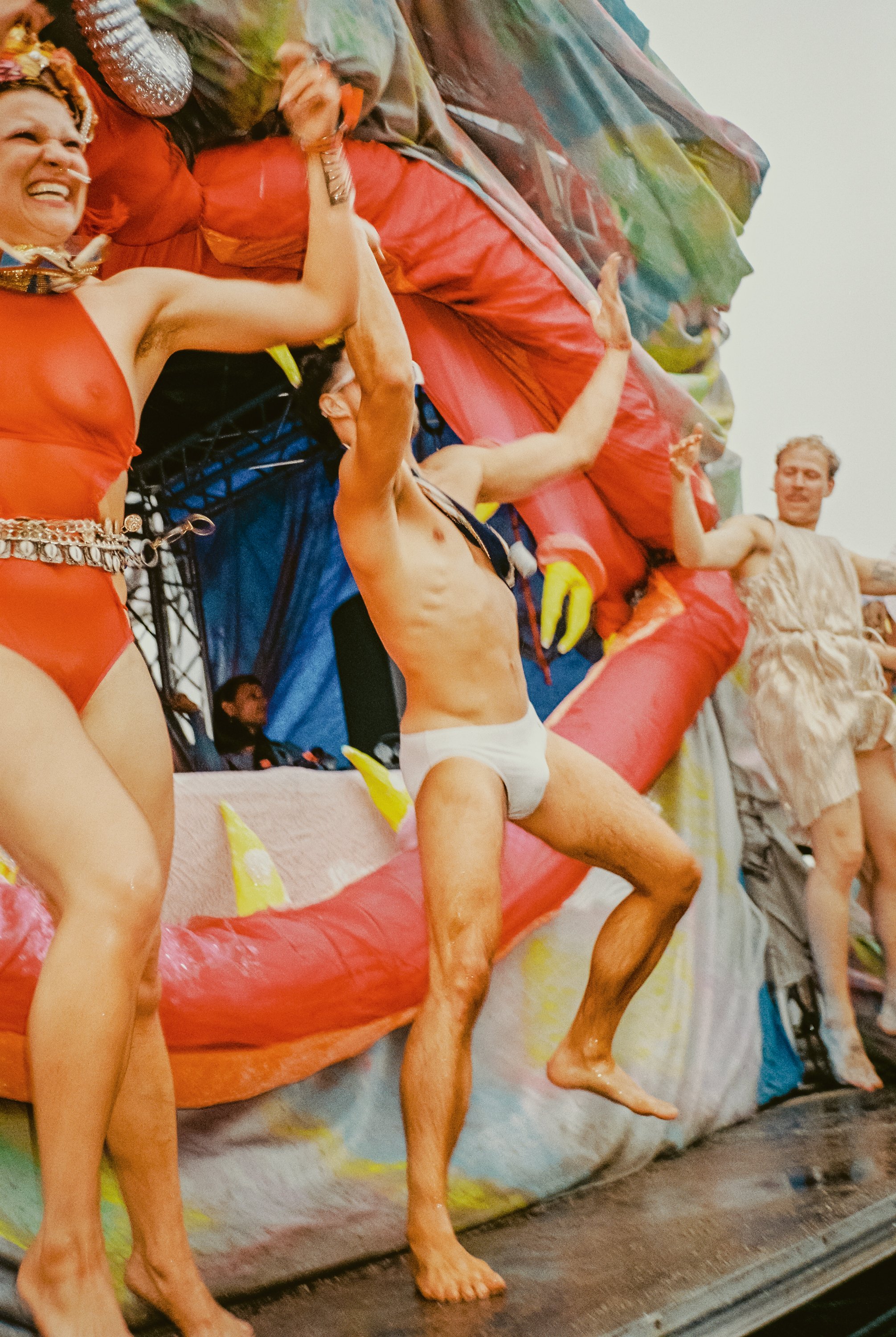
The human body, for Herrlander, is a neutral and gender-fluid vessel. Skin and nudity as expressions of comfort, closeness, melancholy, freedom — not provocation, not statement, but the most direct language available for the things that don't translate into words. This is the thread connecting Home to Fäboden — the ongoing documentary series exploring the introspective, melancholic texture of Swedish summer habitats, shown in Berlin for the first time at Kühlhaus last year — and to the vibrant, uninhibited world of Berlin's queer scene that runs through other parts of the work. Different worlds, the same attentiveness.
Her description of her own creative process is one of the most honest in this collection of conversations.
"Random and dependent on curiosity and anxiety."
She used the camera, initially, to ground herself — a way of being present in the world when presence felt difficult. For a long time she struggled to identify what was specifically hers in the work, what made it recognisably Herrlander rather than competent documentary photography. The answer arrived not through decision but through accumulation: looking back at the portfolio, a defined colour scheme and a focus on naturalistic, fragile expression had been there all along, building quietly while she was busy being anxious about whether they existed.
The ongoing honest conversation — the intimate, unguarded exchange with her surroundings — turned out to be the fingerprint she had been looking for.
2023 gave her a great deal and made it difficult to receive it. A year of travelling, connection, and inspiration in which she achieved more than she had in a long time, and simultaneously struggled to find the mental space to absorb what was happening. Life changing direction every other month. The creative instinct — beautiful randomness — outpacing the capacity to direct it.
What she is asking of herself in 2024 is precise and revealing.
"To be less scared of articulating my ambition to myself and others. A very unswedish thing to do."
That parenthetical — a very unswedish thing to do — is the line that stays. Self-deprecating on the surface, but underneath it a genuine reckoning with the cultural conditioning that tells certain people their desires should be quiet, their ambitions understated, their reach modest. Herrlander is done with modest. The next chapter, she says, goes deeper into vulnerability, harder topics, less fear.
For a photographer whose entire practice is built on the willingness of others to be unguarded in front of her, the logical next step was always to extend the same invitation to herself.
Sara Herrlander is a documentary photographer, visual artist, and filmmaker based in Berlin. Her work can be found at saraherrlander.com. Discover more artists chosen for how they inspire, not just their visibility, at Antakly Projects.


Courtesy of the artist