No algorithms, no hype. Just extraordinary talent and the stories behind it.

Alyssia Lou: The New Art Director of 032c on Chris Marker, Mad Max, and Ebay

Alyssia Lou: The New Art Director of 032c on Chris Marker, Mad Max, and Ebay

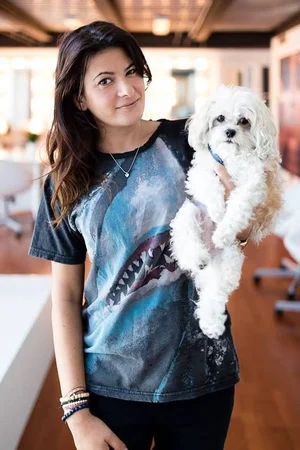
ALYSSIA LOU: ART DIRECTOR AT 032c

How a French art director turned Chris Marker, eBay listings, and rejected flag proposals into the visual language of now.

In the high-stakes chess game of contemporary fashion media, the Art Director of 032c isn't just designing layouts, they're architecting cultural desire itself. Enter Alyssia Lou, a French creative whose brain operates like a brilliantly chaotic search engine, cross-referencing Cambodian rock'n'roll with Sister Corita's activism, Sun Ra's cosmic jazz with New Zealand's failed flag redesigns, all while casually browsing eBay for vernacular treasures.

Her origin story? Bondy, a Parisian suburb she describes with characteristic wit as "more commonly known as Mbappé's town." From there to London, then Berlin, armed with a master's in graphic design and a worldview that treats high and low culture as equally worthy of obsessive study.

We needed to understand how a mind this eclectic translates into visual coherence. What we found was someone who doesn't just curate culture, she metabolizes it.

The Lou Library: A Syllabus for Seeing Differently

Ask Alyssia Lou about her influences and you don't get a tidy list of Bauhaus masters and Swiss typography. You get a manifesto disguised as a mood board, a treasure map to the margins:

Cinema as Cultural Code:

  • Chris Marker's labyrinthine narratives that blur memory and documentary

  • The twisted visual linguistics of Mad Max: Fury Road

  • That one flirting scene with a graphic designer in Michael Mann's Heat (if you know, you know)

  • The culinary precision and ritual of Tampopo

Sound as Portal:

  • The lost, heartbreaking Cambodian rock'n'roll scene of the 1960s, silenced by the Khmer Rouge

  • Sun Ra's afrocosmic visions that bent jazz into interstellar prophecy

  • The ancient energy radiating from Angkor Wat's stone corridors

Design as Resistance:

  • Dieter Roth's radical, anti-precious bookmaking that treated publications like living organisms

  • Kenya Hara's phenomenological study of whiteness—not color, but concept

  • Sister Corita Kent's screen prints that turned Pop Art into social activism

The Absurd as Profound:

  • The hilariously tiny 18-inch Stonehenge prop from This Is Spinal Tap (a masterclass in failed scale)

  • The rejected flag proposals of New Zealand and the EU (collective identity as design problem)

  • Georgia O'Keeffe's handwriting and recipes (intimacy through the mundane)

  • eBay—yes, that site—as an infinite archive of vernacular design and human desire

This isn't eclecticism for its own sake. This is a designer who understands that visual language lives everywhere, not just in the canonized corners of design history. The margins aren't marginal, they're where the real conversations happen.

The Work That Made Her: Process and Liberation

When Lou talks about the work that defines her practice, two projects emerge as north stars:

JOMOHOMO (2016) — Designed with collective Åbäke for artist Ingrid Hora, this book represents Lou at her most collaborative and experimental. "It was a refreshing and significant experience," she reflects. "That moment in time defines my way of approaching design, of working, and of communicating today."

Working with Åbäke, the London/Stockholm design collective known for their process-driven, anti-authoritarian approach—gave Lou permission to embrace design as conversation rather than declaration. The book isn't just about Hora; it's a three-way dialogue between artist, designers, and the physicality of print itself.

'The Advantages of Being a Woman Designer' for IDEA Magazine №386 — On a more personal level, this contribution was "extremely liberating." The title nods to the Guerrilla Girls' iconic 1988 poster "The Advantages of Being a Woman Artist," which sardonically listed benefits like "Working without the pressure of success" and "Not having to undergo the embarrassment of being called a genius." Lou's piece continues that critical tradition, using design itself as a feminist intervention. It signals a creator who won't separate her politics from her practice, who understands that every layout choice is also a statement about who gets seen and how.

Métro-Boulot-Dodo, Hold the Métro

When asked about navigating the pandemic's upheaval, Lou delivers a perfectly calibrated response that's both sharp and poignant: "métro-boulot-dodo – minus the métro."

For the uninitiated, this French phrase—literally "metro-work-sleep"—is slang for the soul-crushing daily grind, the mechanical rhythm of commute-labor-collapse-repeat. Lou's edit is brutal in its simplicity: remove the transit, the physical movement through the city, the accidental encounters, the stolen moments between destinations.

What remains? Work and sleep. The insular rhythm of lockdown distilled into five words. It's the kind of wit that cuts because it's true—and because it recognizes what was lost when we stopped moving through shared space.

Why Lou Matters Now

Alyssia Lou represents a crucial evolution in creative leadership—one that's intellectually omnivorous, culturally ambidextrous, and deeply suspicious of hierarchies that privilege certain references over others. She's as likely to cite a Khmer rock band as a canonical designer, to find meaning in eBay ephemera as in museum collections.

This isn't postmodern irony or relativism. It's a rigorous belief that visual culture is made by everyone, everywhere, all the time—and that the art director's job isn't to police good taste but to synthesize the chaos into something that makes you stop and reconsider what you thought you knew.

At 032c—the Berlin-based fashion and culture bible that's equal parts magazine, brand, and intellectual provocation—Lou's appointment signals a thrilling shift. Expect visual languages that borrow from Brutalist architecture and vernacular signage with equal reverence. Expect layouts that feel like Marker films: associative, layered, demanding your full attention. Expect the margins to move to the center.

The Lou Doctrine

If we had to distill Alyssia Lou's approach into guiding principles, they might look like this:

1. High and low are social constructs, not aesthetic truths.
Georgia O'Keeffe's grocery lists matter as much as her paintings. eBay is an archive. Pay attention.

2. Collaboration is methodology.
The best work happens in conversation, not isolation. Design is dialogue.

3. Your politics are inseparable from your pixels.
Every typeface choice, every image crop, every white space is a statement about power and visibility.

4. The weird detail is often the most honest.
An 18-inch Stonehenge. A rejected flag. The moment when form fails and reveals something true.

5. Context is everything; commute is context.
When you remove the metro, you don't just lose transit—you lose the accidental, the public, the between-spaces where culture actually lives.

In a creative landscape often dominated by safe choices and algorithmic sameness, Lou's brilliantly chaotic reference library feels like an act of resistance. She's building visual languages that refuse to be easily categorized, that draw connections no mood board algorithm would ever suggest, that treat design as a form of critical thinking rather than decorative polish.

From Bondy to Berlin, from Marker to eBay, from the cosmic to the vernacular—Alyssia Lou is mapping a new geography of influence, one eclectic, liberating reference at a time.

And somewhere, on eBay right now, there's probably an artifact she'll turn into tomorrow's visual language. The genius is knowing where to look.

NINU NINA 032
image (6).png
image (5).png
AlyssiaLou_032c_20_YEARS_Reposts (1).jpg

Reposts of 20 YEARS, a 28-page fold-out in the issue 38 of 032c.

WHAT REMAINS WHEN NOTHING IS LEFT

WHAT REMAINS WHEN NOTHING IS LEFT

ARTIST SENEM OEZDOGAN

ARTIST SENEM OEZDOGAN